


My wife and I completed the Everest Base Camp Trek with Unique Sherpa Trek & Expedition Pvt. Ltd., and it was one of the greatest experiences of our lives. Everything was perfectly organized...

Tour leading by well trained team
Hassle-free and instant booking
100% customers satisfaction
reasonable price & best service
no hidden cost & secure payment
Unique Sherpa Trek & Expeditions runs and organizes Mt. Himlung Expeditions with proper and stunning planning and with skilled logistical support, wherever full tenting arrangements are needed on this glorious trek and climb of Mt. Himlung. Himlung Himal Expedition is located in the Manaslu Region, one of the most beautiful regions for trekkers in Nepal.
The region sees hardly a thousand travelers each year. As a result, the region is untouched by modernization. So for everyone seeking a truly remote, wilderness state, there’s no place better than this region.
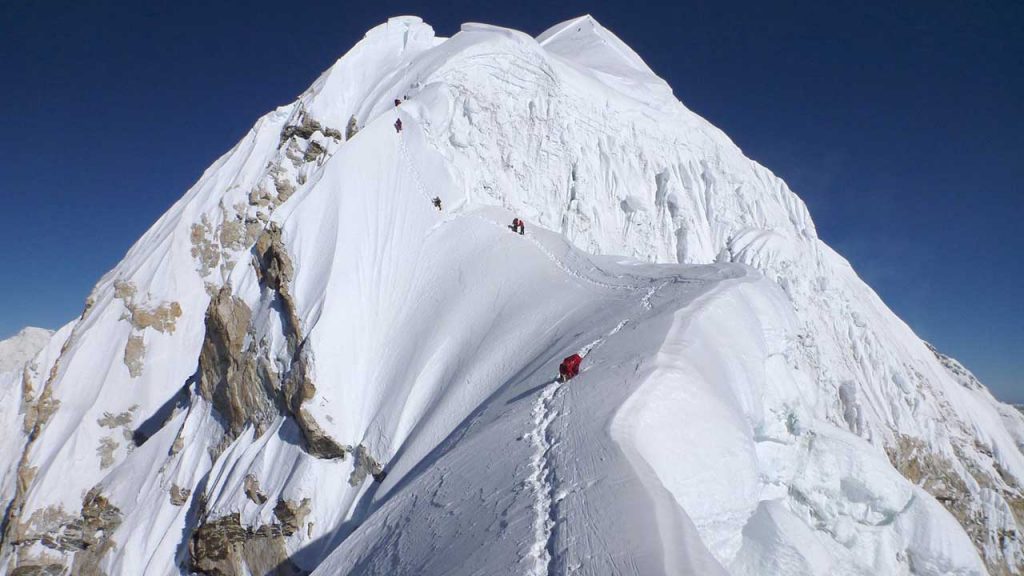
In one of the quaint corners of this region is the Himlung Himal, whose expedition is a delightful prospect. Himlung Mountain is northeast of the Annapurna range. It lies quite close to Tibet. With an altitude of 7,120m. It is a mouth-watering mountain to climb for all expeditionists.
It is a mountain that has a high success rate for ascent, considering its technicalities. A Japanese team was the first to complete this expedition in 1992. Since then, there have been a few more splendid attempts and success stories.
One of the most challenging days of the expedition is the ascent from the Himlung Base Camp (4850 meters) to the Himlung Himal (7120 meters). So you will gain an altitude of more than 2300 meters doing so. The ascent to Himlung Himal and its descent to the Himlung Base Camp will take 11 days in total.
Himlung Expedition leads you into complete wilderness within rugged terrain and jagged mountains of Northern Annapurna-Damodar, and also close to the Manang range of 7000 mountain peaks. Among the 7,000 mountain peaks, Himlung has a high success rate until now, with climbers ascending to the top.
Mt. Himlung stands proudly at 7,120 meters and 23, 380 fit high, in remote and isolated areas of Nepal’s North-West Himalaya between the peaks of Damodar and Manaslu mountains. A well-hidden peak is usually explored and visited in the region on the far side of Nar and Phu villages, and far away from the main trekking path of the well-liked Annapurna Circuit route of the gorgeous Manang region.
Mt. Himlung is situated on the far side, northeast of the Nar and Phu areas; wherever our trek leads, with a night long in the lodge around the main Annapurna Circuit path up to Koto near the oversized city of Chame on route to the main areas of Manang district.
After Koto, on the hidden trails, gorge, and the windswept valley towards Phu villages, the higher main village of Nar & Phu area is embedded inside the big peaks of Chulus-Pisang–Damodar Himal and next to the Larke Pass of Manaslu area.
Our climb is undertaken after many practice and acclimatization days at Phu and base camp. And then proceeding for the climb to the summit on a clear, fine morning, after setting up two more camps from base camp onward within ten days to reach the summit on time, as weather permits.
This is one of the most technically challenging mountains to climb among other 7,000-meter peaks. However, with a perfect team of guides and staff, and with your positive attitude and determination. We’ll lead you to the summit with a high chance of success and safely back to Kathmandu on a wide-ranging life journey on the Himlung Expedition.
Day 1: Arrival in Kathmandu (1,396m/4,580ft) and transfer to the hotel.
Day 2: Sightseeing in Kathmandu and climbing preparation (1,396m/4,580ft), 10–15 km in 5–6 hours.
Day 3: Drive from Kathmandu (1,396m/4,580ft) to Chamje (1,410m/4,626ft), 230 km in 8–9 hours.
Day 4: Trek from Chamje (1,410m/4,626ft) to Dharapani (1,960m/6,430ft), 15 km in 6–7 hours.
Day 5: Trek from Dharapani (1,960m/6,430ft) to Koto (2,600m/8,528ft), 18 km in 6–7 hours.
Day 6: Trek from Koto (2,600m/8,528ft) to Singenge (3,230m/10,594ft), 13 km in 6–7 hours.
Day 7: Trek from Singenge (3,230m/10,594ft) to Kyang (4,100m/13,448ft), 14 km in 6–7 hours.
Day 8: Trek from Kyang (4,100m/13,448ft) to Phu (4,580m/15,022ft), 12 km in 5–6 hours.
Day 9: Exploration day around Phu Valley (4,580m/15,022ft), visiting Samdu, Choling, and Tashi Monastery, 5–8 km in 3–4 hours.
Day 10: Trek from Phu (4,580m/15,022ft) to Himlung Himal Base Camp (4,842m/15,881ft), 8 km in 4–5 hours.
Day 11: Rest and acclimatization day at Himlung Himal Base Camp (4,842m/15,881ft).
Day 12: Climb from Base Camp (4,842m/15,881ft) to Camp I (5,450m/17,881ft), 5 km in 5–6 hours.
Day 13: Climb from Camp I (5,450m/17,881ft) to Camp II (6,000m/19,685ft) and return to Base Camp, 10 km in 8–10 hours.
Day 14: Rest day at Base Camp (4,842m/15,881ft).
Day 15: Climb from Base Camp (4,842m/15,881ft) to Camp I (5,450m/17,881ft), 5 km in 5–6 hours.
Day 16: Climb from Camp I (5,450m/17,881ft) to Camp II (6,000m/19,685ft), covering approximately 4 km in 4–5 hours.
Day 17: Climb from Camp II (6,000m/19,685ft) to Camp III (6,250m/20,505ft), 3 km in 3–4 hours.
Day 18: Summit Himlung Himal (7,126m/23,379ft) and descend to Camp III (6,250m/20,505ft), 8 km in 10–14 hours.
Day 19: Descend from Camp III (6,250m/20,505ft) to Base Camp (4,842m/15,881ft), 12 km in 6–7 hours.
Day 20: Trek from Base Camp (4,842m/15,881ft) to Phu Village (4,580m/15,022ft), 8 km in 3–4 hours.
Day 21: Trek from Phu (4,580m/15,022ft) to Meta (3,560m/11,676ft), 18 km in 6–7 hours.
Day 22: Trek from Meta (3,560m/11,676ft) to Koto (2,600m/8,528ft), 17 km in 6–7 hours.
Day 23: Trek from Koto (2,600m/8,528ft) to Dharapani (1,960m/6,430ft), 18 km in 6–7 hours.
Day 24: Trek from Dharapani (1,960m/6,430ft) to Chamje (1,410m/4,626ft),15 km in 5–6 hours.
Day 25: Drive from Chamje (1,410m/4,626ft) to Kathmandu (1,396m/4,580ft), 230 km in 8–9 hours.
Day 26: Leisure day in Kathmandu (1,396m/4,580ft), optional sightseeing and shopping.
Day 27: International departure from Kathmandu (1,396m/4,580ft) according to flight schedule.
On the day of your arrival, a representative from Nepal Guide Treks and Expedition will greet you at Tribhuvan International Airport. As per the schedule, you will be driven to the hotel in the heart of Kathmandu City 1345m. Upon arrival at the hotel, our representative will aid you in the check-in procedure. Later that evening, in the dinner program; you shall gather information regarding the Himlung expedition.
On the second day of your arrival, you will spend the entire day sightseeing in Kathmandu. The tour guide will escort you from your hotel to some of the world heritage sites. Besides, the stunning tour around Kathmandu city. You will complete the essential paperwork before the Himlung expedition.
After breakfast, the tour guide will escort you to a private vehicle waiting outside the hotel. The views are absolutely stunning throughout the journey. The scenic view will enhance your tour experience to the absolute. As you arrive at Dumre, the path ahead passes through hill towards Besisahar. After the 7-8 hours drive from Kathmandu, you will finally arrive at Chamje. You will stay overnight at a guest house for the night at Chamje 1410m.
After enjoying a splendid breakfast, we leave the guest house at Chamje. The trail ahead will lead you towards a suspension bridge. After the crossing, the trail gets steeper towards Sattae as the valley becomes narrower. Shortly after, you will arrive at Tal village; which is known widely as the entrance to Manang district. From Tal, the trail ahead descends towards a stunning suspension bridge over the Marsyangdi River. The trail gets moderately ahead as you make your way to Dharapani. After the 5-6 hours trek from Chamje, you will arrive at the guest house in Dharapani. You will stay for the night at Dharapani 1960m.
Early in the morning, after breakfast; you shall follow the trail towards the Bagarchhap village. Upon the arrival at the village, the trail gets steeper as it makes its way through dense pine forest. Shortly after, you will arrive at Timang; it is a vantage point for stunning views of Lamjung Himal 5587m. The expedition ahead takes you towards a flat trail that descends before a steep climb again. The hike is certainly strenuous as you make your way up to reach Thanchok. From here, you descend toward a village at Koto 2600m. After the 5-6 hours trek, the day ends at a tea house for an overnight stay.
The journey today leads you to a 6-7 hours trek towards Singene. Before you start the trek, you must register yourself at the permit check-post at Koto. After the registration, you will head towards a suspension over the magnificent Seuti Khola tributary. Our trail ahead will get steeper as we continue the thrilling experience through gorges and canyons. Shortly after, you will cross a wooden bridge before making a steep climb before your arrival at Singenge 3230m. You will stay for the night at a camp.
The trek ahead will offer you astounding views of Lamjung Himal 5587m and Annapurna II 7937m. The trail traverses around a steep hill towards a clearing of Junam Goth. The hike shall then lead you to steep ascend before descending towards Mruju Khola. You will then cross the Murju Khola, which is an outflow of Lyapche Glacier. After the 6-7 hours, you will make a steep walk across a section of eroded moraine towards Kyang. Upon your arrival, you will set up camp and stay for the night at Kyang 4100m.
The journey starts with a splendid breakfast at Kyang. We leave kyang early in the morning and head towards a narrow gorge. Shortly, the trail descends towards a river. Upon arriving at the river bed, you will cross the river via a wooden bridge. The trail ahead heads north towards a steep climb. As you gently make your way up, you will witness several large chortens and deserted buildings. The 5-6 hours trek comes to an end after the crossing of a suspension bridge to Phu 4580m. Tonight, you will enjoy dinner and rest for the night at a tea house.
Today, you shall spend an additional day at Phu Valley. The exploration around the village will aid you in the acclimatization process. You spend your day strolling through the 800-year-old stone village. The tour also features a visit to the magnificent Samdu Monastery and Choling Monastery. Later that evening, you will walk the streets of the village. The experience makes you feel as if you stepped back in time. You will stay for the night at a tea house in Phu village.
Today is the shortest day of trekking in the entire expedition. The trek lasts for around 2-4 hours. The day starts with a pleasant breakfast at the tea house. Shortly after, you will leave Phu village with stunning views of the mountains. The trail will ascend all the way up to 4,842 meters at our campsite. Upon arrival at the campsite, our crew will set up camp for the night. Further preparation shall be made for setting camps at higher altitudes.
Today is dedicated to rest and acclimatization at Himlung Himal Base Camp (4,842m / 15,881ft), an essential step in preparing for the higher elevations ahead. Rather than remaining inactive, you will take part in short acclimatization hikes to higher viewpoints before returning to base camp, following the principle of "climb high, sleep low."
Your climbing guide will conduct a comprehensive pre-climb briefing, reviewing the route, safety procedures, and proper use of mountaineering equipment. This day also provides time to check and organize your gear, monitor your physical condition, and enjoy the spectacular mountain surroundings, ensuring you are well-prepared and confident for the climbing stages to come.
The expedition ahead shall feature several days worth of training and practices. In addition, you will spend most of the days for adequate acclimatization to the altitude. The Sherpa crew will work day and night to set up additional crew above the base camp 4,920m. This will allow the provision of hygienic meals and efficient routes towards the summit of Himlung Himal. The trails are significantly snowy towards camp 1. So, you will maintain a slow and steady pace until your arrival at camp 1 5450m. After your arrival in the camp, you will spectate the stunning views of the stunning mountain views of the Annapurna, Manaslu and Gangapurna.
The morning begins with a chill winter breeze of the high himalayas. The breakfast will taste magnificent with the stunning views of the mountains. After you check your supplies, you will begin your journey towards Camp 2. It is a steady but strenuous climb but a steady composure will help you pass through it. Nonetheless, you’ll have an epic adventure on the adventurous route of the Himlung Himal. Upon your arrival at Camp 2, you will enjoy a magnificent view of the sunset. It is a truly mesmerizing once in a lifetime experience.
You will spend an entire day laid back on the camp. The resting procedure will significantly aid in the process of acclimatization. Besides, you can also walk around the campsite and click a few pictures for a memorable experience. In addition, the guide will equip you with the necessary gear for the trip. Further in the expedition, you will follow the guidance of experienced Sherpa guides. The guide’s expertise will allow you to execute several climbing techniques to reach the summit 7126m.
After an early breakfast, begin your ascent from Himlung Himal Base Camp (4,842m / 15,881ft) to Camp I (5,450m / 17,881ft). Covering approximately 5 km in 5–6 hours, the climb follows rocky glacial terrain, snow slopes, and sections of moraine, offering magnificent views of the surrounding Himalayan peaks. Under the guidance of experienced Sherpa climbing guides, you will gradually gain altitude while maintaining a steady pace to aid acclimatization. Upon reaching Camp I, settle into your tents, enjoy a warm meal, and rest in preparation for the higher camps and the summit push in the days ahead.
After breakfast at Camp I (5,450m / 17,881ft), continue your ascent to Camp II (6,000m / 19,685ft). The climb covers approximately 4 km and takes around 4–5 hours, following snow-covered slopes and glaciated terrain with increasingly spectacular views of the surrounding Himalayan peaks. Guided by experienced Sherpa climbers, you will ascend at a controlled pace, using mountaineering equipment where necessary to ensure safety. Upon arrival at Camp II, settle into your tents, hydrate well, and rest while your guide assesses weather conditions and prepares the team for the next stage of the expedition.
After an adequate rest and acclimatization, your body will be revitalized for the journey ahead. It is a rather short 250 m ascend to camp 3. However, you will proceed with caution to avoid any risk of injury. Due to the short trek distance, you’ll arrive at the campsite at noon. After an enjoyable lunch, you will prepare for the expedition tomorrow. At the summit, the stunning landscape will reward you with stunning views of the Annapurna 8091m and Manaslu range 8156m. Due to the risk of altitude sickness, you will spend short but quality at the summit. Shortly after, you will make you descend to camp 3.
Today is a big day, it is an important part of the entire Himlung himal expedition. So, the trek leader makes sure if all of the member’s trek equipments are in working order. You will start you journey in the morning. The trek leader pays an extra attention as the trail ahead is certainly strenuous. He will be equipped with a satellite phone for evacuation if any situation may arise. However, with the aid of reliable equipment and expertise of the guide the climb to the summit will be a success. After you reach the summit, you will enjoy a vista of the surrounding landscape. The pristine beauty of the himalayan mountains
After an astonishing experience in the summit, you will make your way back to the Base camp. As the trail ahead descends through the stunning landscape. It will be easier for you to walk yourself to the camp in a short time. However, you need to take care of your knees and ankles. Due to the uneven texture of the trails, you might sprain or hurt them. After the 7-8 hours worth of hike you will finally arrive at the Base camp. You will spend the night at the camp reminiscing your memories on your journey from the summit.
After your astonishing achievement at the summit, you will make a relaxed start from the base camp. After clean up, you will enjoy breakfast and prepare for the journey ahead. You will retrace your steps back to Phu village. The 5-6 hours descend is moderate, but you must take care of your ankles and knees along the way. Upon your arrival at the Phu village 4580m, you will enjoy the exploration of the streets in the village. You will stay for the night at a guest house in the magical village.
Today, we shall leave Phu village behind and follow the trail back to the suspension bridge. The trek ahead leads to a series of chorten which then descends towards Kyang. The trail passes an eroded moraine before the crossing over Mruju Khola. We retrace our 5-6 hours trek with stunning views of the Lamjung Hima 5587m. Our day ends at after arriving at the settlement of Meta. You will spend the night at a guest house in Meta 3560m.
Our journey proceeds on the same trail as you descents to the bottom of the valley. The trail ahead passes through stone huts of Singenge towards a dense forest. The walk ahead leads you to a slight descend to a suspension over Seti Khola. You will cross the stunning suspension bridger before a short ascend to Koto village. The trek lasts for around 6-7 hours. Upon your arrival at Koto 2600m, you will spend the night at a guest house.
Early this morning, we shall enjoy a splendid breakfast at the guest house. Afterward, we will pack our belongings and leave koto behind. The trail is steep ahead as we approach the village of Thanchok. From here on, you will make a short descend before the arrival at Timang. As there is plenty of tea house at Timang. You can catch a break at the tea houses and capture magnificent views of Lamjung Himal. After the quick, you will make your way through the pine forest towards Bagarchha village. The 5-6 hours trek comes to an end at Dharapani 1960m. We stay here for the night at a guest house.
After a quick breakfast, you will leave the tea house at Dharapani. Further on the trek, you will hike alongside the areas affected by landslides. The hike then starts to make a steep descent towards a suspension bridge over the Marsyangdi River. Further, the trail gradually ascends towards Tal village. Eventually, as you pass through a narrow valley. You will arrive at the village settlement in Satalle. Today, it’s a moderate 4-5 hours of hike to chamje 1410m. Upon your arrival at the village, you will celebrate the expedition with your team members. You will stay for the night at a guest house.
Early in the morning, you will pack your belongings in the guest house you are staying in. After a delicate breakfast, you will bid farewell to chamje and drive back to Kathmandu. On your way back, you will enjoy a lot of scenic landscapes and terraced farmlands. The ride offers splendid views of Manaslu, Annapurna, and Ganesh Himal mountain ranges. As you make your way back, you can even enjoy the daily lifestyle of the people in the countryside. After the 7-8 hours worth of driving, you arrive at Kathmandu 1345m. Shortly after, our guide will escort you to your respective Hotel.
Upon your arrival at Kathmandu, you surely would like to spend your time around the world heritage sites. Our guide will escort you to the several sites which you could not visit at the beginning of the expedition. Later the following evening, you will enjoy the serene atmosphere of Thamel’s nightlife. You can even buy items in the shops at Thamel as a souvenir for your relatives back home. Further, you will celebrate the success of the expedition with a splendid dinner back in the Hotel.
Today, you will bid farewell to the expedition team at the Hotel. Our representative will guide you through the check-out procedure at the front desk. After he/she ensures the escort of your luggage to the private vehicle. The representative will drop you at the Tribhuvan International Airport according to the flight schedule. He/she will bid you farewell and wish you a safe flight ahead.

Mount Himlung is located in the Nepal Himalayas and stands at an altitude of 7,126 meters (23,379 feet) above sea level.
Mount Himlung is situated in the Nar Phu Valley region of the Annapurna Conservation Area in Nepal, near the border with Tibet.
While Mount Himlung is considered a technically moderate peak compared to some of the higher and more challenging mountains in the region like Everest or Makalu, it still requires mountaineering skills and experience. Climbers should have prior experience with high-altitude climbing, glacier travel, and the use of climbing equipment.
The best time to climb Mount Himlung is during the spring (April to May) and autumn (September to November) climbing seasons. These months typically offer stable weather conditions, clear skies, and lower precipitation, making it safer and more feasible to attempt the ascent.
The duration of a Mount Himlung expedition varies depending on factors such as the chosen route, weather conditions, and individual climber's acclimatization schedule. Generally, expeditions to Mount Himlung take around 3 to 4 weeks, including acclimatization days, base camp setup, and the summit push.
Climbing permits and trekking permits are required to climb Mount Himlung. These permits can be obtained through a registered trekking agency in Nepal, and they include the climbing permit issued by the Nepal Mountaineering Association (NMA) and the trekking permits required for the Annapurna region.
Depending on the route and expedition logistics, fixed ropes and high-altitude camps may be established by climbing teams to facilitate the ascent of Mount Himlung. However, climbers should be prepared to navigate unroped sections and set up temporary camps as needed.
Climbing Mount Himlung involves risks such as altitude sickness, avalanches, crevasses, rockfall, and extreme weather conditions. Climbers should be aware of these hazards and take necessary precautions, including proper acclimatization, safety equipment, and emergency preparedness.
Supplemental oxygen is typically not required for climbing Mount Himlung due to its lower altitude compared to peaks like Everest or Makalu. However, some climbers may choose to bring supplemental oxygen for use during the summit push if deemed necessary.
Climbing Mount Himlung is not recommended for beginners due to its high altitude, technical terrain, and remote location. It is better suited for experienced climbers with prior high-altitude climbing experience and mountaineering skills.
01. Location and Altitude: Mt. Himlung is located in the Manaslu region of Nepal, near the Tibetan border. It stands at an altitude of 7,126 meters (23,379 feet) above sea level, making it one of the lesser-known but challenging peaks in the Himalayas.
02. Expedition Difficulty: Climbing Mt. Himlung is considered moderately challenging, requiring technical climbing skills, high-altitude experience, and proper acclimatization. The route features steep slopes, crevasses, and potentially hazardous terrain, requiring climbers to be well-prepared and experienced.
03. Permit Requirements: Like other peaks in Nepal, climbers attempting Mt. Himlung must obtain climbing permits from the Nepal Mountaineering Association (NMA) or the respective government authorities. Permit fees vary depending on the climbing season, group size, and nationality of climbers.
04. Best Time for Climbing: The climbing season for Mt. Himlung typically spans from April to May and from September to October, coinciding with the spring and autumn seasons in Nepal. During these months, the weather is generally more stable, with clear skies and reduced precipitation, making it safer and more feasible to attempt the ascent.
05. Route and Itinerary: The standard climbing route for Mt. Himlung follows a gradual ascent from the base camp, traversing through glaciated terrain, snow slopes, and rocky sections. The expedition itinerary typically includes several acclimatization rotations, establishing high camps, and a summit push from the final camp.
06. Logistics and Support: Expedition operators and support staff provide logistical support for Mt. Himlung expeditions, including transportation, accommodation, meals, equipment, and experienced climbing guides. Base camp facilities may include tents, dining areas, communication facilities, and medical support.
07. Climbing Gear and Equipment: Climbers require specialized mountaineering gear and equipment for the Mt. Himlung expedition, including crampons, ice axes, harnesses, helmets, ropes, and protective clothing. Personal gear such as high-altitude sleeping bags, down jackets, and climbing boots are essential for safety and comfort.
08. High-Altitude Acclimatization: Proper acclimatization is crucial for climbers attempting Mt. Himlung, as the high altitude poses significant physiological challenges. Acclimatization rotations involve gradually ascending to higher altitudes, spending time at intermediate camps, and allowing the body to adjust to reduced oxygen levels.
09. Safety Considerations: Climbing Mt. Himlung involves inherent risks, including altitude sickness, avalanches, rockfall, and adverse weather conditions. Expedition leaders prioritize safety by conducting risk assessments, monitoring weather forecasts, implementing emergency protocols, and providing climbers with appropriate training and guidance.
10. Personal Preparation: Climbers should undergo thorough physical training, mental preparation, and skill development before attempting Mt. Himlung. Physical conditioning should focus on cardiovascular fitness, strength training, and endurance exercises, while mental preparation involves developing resilience, decision-making skills, and problem-solving abilities.
11. Environmental Awareness: Climbers are encouraged to practice responsible and sustainable mountaineering practices to minimize their environmental impact on Mt. Himlung and its surrounding ecosystems. This includes proper waste disposal, Leave No Trace principles, and supporting local conservation initiatives.
The Mt. Himlung Expedition Package is a challenging high-altitude mountaineering adventure in Nepal's remote Manaslu region, reaching 7,126 meters (23,379 feet). The expedition combines remote trekking with glacier travel, snow climbing, steep terrain, high camps, extreme cold, and a demanding summit ascent. Proper Mt. Himlung Expedition equipment is essential for safety, warmth, comfort, and a successful summit attempt.
Carry warm, waterproof high-altitude mountaineering boots that are fully compatible with your crampons. Double boots are recommended for cold high-altitude conditions, and they should be properly broken in before the expedition.
Use reliable 12-point or suitable mountaineering crampons compatible with your boots for secure movement on snow, ice, glaciers, and steep terrain.
Carry a suitable 50–70 cm mountaineering ice axe for balance, snow travel, and appropriate self-arrest techniques.
A lightweight, adjustable mountaineering climbing harness is essential for glacier crossings, fixed ropes, and technical climbing sections.
A certified climbing helmet protects your head from falling rocks, ice, and other mountain hazards.
A Jumar/mechanical ascender may be required for ascending fixed ropes on steep sections of the Himlung Himal climbing route.
Carry an appropriate ATC, Figure-8, or approved descender/belay device compatible with the expedition's rope system.
Carry several strong locking carabiners for connecting your harness, ascender, slings, and approved climbing safety systems.
Non-locking carabiners are useful for attaching slings, equipment, and other appropriate climbing systems.
Carry suitable 60 cm and 120 cm climbing slings for personal attachment and rope-management systems.
Carry suitable Prusik loops or accessory cords for backup within appropriate rope systems and according to your climbing team's procedures.
Depending on route conditions and expedition strategy, ice screws may be required for protection or anchors. They should be selected and managed by experienced climbers.
Snow stakes, pickets, or other snow-protection equipment may be required depending on the climbing route and current conditions.
Appropriate climbing and fixed ropes are essential for glacier travel and steep snow or ice sections. The expedition team should manage rope selection, installation, and anchors.
Carry a comfortable 40–50 liter climbing backpack for summit rotations and climbing days, with enough space for water, clothing layers, snacks, and essential personal equipment.
Use a durable 80–120 liter expedition duffel bag for transporting personal equipment between Kathmandu, the trekking route, Base Camp, and higher camps.
Carry an expedition-grade high-altitude sleeping bag suitable for cold conditions at Base Camp and higher camps.
A high-quality insulated sleeping mat provides essential insulation from cold ground during alpine camping.
A warm sleeping bag liner provides additional insulation and helps keep your sleeping bag clean.
Carry 2–3 sets of high-quality thermal base layers made from merino wool or suitable technical synthetic materials.
A warm fleece or technical mid-layer provides insulation during trekking, acclimatization rotations, and less extreme conditions.
Carry a high-quality down or synthetic insulated jacket for cold mornings, evenings, Base Camp, and higher camps.
For the summit push, carry a suitable high-altitude insulated down suit or equivalent extreme-cold clothing system appropriate for the expected conditions.
A high-performance waterproof and windproof shell protects against snow, rain, strong winds, and rapidly changing Himalayan weather.
Warm insulated trousers or expedition down pants provide additional protection during cold high-altitude climbing and the summit attempt.
Waterproof and windproof shell trousers protect against snow, wind, and wet conditions.
Carry several glove systems, including liner gloves, insulated climbing gloves, and warm mittens, to adapt to changing temperatures.
Large insulated mittens provide additional hand protection during the coldest conditions and summit push.
A high-quality balaclava protects your face, ears, head, and neck from cold wind and freezing temperatures.
Carry a warm wool or technical insulated hat for use around Base Camp and during cold climbing rotations.
A buff or neck gaiter protects your face and neck from cold wind, snow, dust, and dry high-altitude air.
High-quality Category 4 glacier sunglasses with strong UV protection are essential for protecting your eyes from intense sunlight and snow glare.
Carry high-quality snow goggles for strong winds, snowfall, blowing snow, and summit-day conditions.
Use SPF 50+ sunscreen and high-protection lip balm to protect exposed skin from intense UV radiation, wind, and cold.
High-altitude gaiters help prevent snow from entering your boots and provide additional protection during glacier and snow travel.
Adjustable trekking poles are useful during the approach trek and lower-altitude acclimatization days.
Carry a powerful, reliable high-altitude headlamp with spare batteries, especially because summit attempts often begin before sunrise.
Carry sufficient spare batteries and protect them from extreme cold by storing them appropriately.
Carry durable water bottles suitable for freezing conditions and with enough capacity for long climbing days.
An insulated flask or thermos helps keep drinking water warm and reduces the chance of freezing at higher camps.
Carry purification tablets, drops, or a suitable filter as a backup for treating drinking water.
Supplemental oxygen is not necessarily required by every climber on Himlung, but its use may be considered according to the expedition strategy, individual needs, and medical guidance. Any oxygen cylinders, regulators, masks, or related systems should be professionally selected and managed.
Carry a compact personal medical kit containing blister treatment, bandages, antiseptic supplies, medical tape, and other personal necessities.
Bring sufficient personal medication for the entire expedition and keep it protected, dry, and easily accessible.
The expedition should have appropriate emergency equipment and procedures for altitude illness, frostbite, hypothermia, severe weather, falls, and other high-altitude emergencies.
Obtain comprehensive insurance covering high-altitude mountaineering, Mt. Himlung climbing, emergency evacuation, and helicopter rescue where applicable. Verify the maximum altitude and climbing activities covered by the policy.
Keep your passport, climbing permit, insurance documents, emergency contacts, medical information, and other important documents in waterproof protection.
A remote Himlung expedition should have reliable satellite communication equipment for communication between Base Camp, higher camps, expedition leaders, and emergency services.
GPS devices and other navigation equipment can support route planning and emergency coordination as part of the expedition's overall navigation system.
Carry suitable high-capacity power banks and charging equipment for smartphones, cameras, GPS devices, satellite communication devices, and other electronics.
Use waterproof dry bags to protect clothing, electronics, documents, sleeping equipment, and valuables from snow and moisture.
Bring a durable camera or smartphone to capture Mt. Himlung, Himlung Himal, Manaslu, Annapurna, glaciers, remote valleys, high camps, and spectacular Himalayan panoramas.
Carry lightweight, high-calorie foods such as energy bars, chocolate, nuts, dried fruit, gels, biscuits, and other preferred high-altitude snacks.
Electrolyte products can support hydration during demanding trekking, acclimatization, and climbing days.
Pack lightweight toiletries including a toothbrush, toothpaste, biodegradable soap, wet wipes, tissues, hand sanitizer, and a quick-drying towel.
Lightweight camp shoes provide comfort and allow your feet to rest after long climbing days.
Carry spare boot laces, repair tape, cable ties, small sewing supplies, and other lightweight equipment-repair essentials.
Before departure, inspect boots, crampons, harness, helmet, ascender, carabiners, slings, ice axe, clothing, sleeping bag, and other technical equipment carefully.
The expedition team should have appropriate radio communication, satellite communication, emergency signaling, weather information, and rescue equipment suitable for the Himlung Himal route.
Physical fitness, endurance, technical climbing skills, high-altitude experience, acclimatization, teamwork, patience, discipline, and sound decision-making are essential for a successful Mt. Himlung Expedition.
The most important Mt. Himlung Expedition equipment includes high-altitude mountaineering boots, crampons, a mountaineering ice axe, climbing harness, helmet, Jumar/ascender, descender, locking carabiners, climbing slings, Prusik loops, technical protection, insulated clothing, high-altitude sleeping bag, extreme-cold gloves and mittens, glacier sunglasses, snow goggles, headlamp, insulated water bottles, and appropriate emergency communication equipment.
A practical high-altitude clothing system is:
Thermal Base Layer → Fleece/Mid Layer → Down Jacket → Insulated Expedition Layer → Waterproof & Windproof Shell
Because Mt. Himlung climbing involves high altitude, glacier travel, snow and ice, remote terrain, and extreme weather, all technical equipment should be compatible, properly fitted, inspected, and used according to the procedures of your qualified expedition team.
Climbers should have appropriate physical preparation, high-altitude experience, technical climbing skills, acclimatization, and professional expedition support before attempting Mt. Himlung.
Not every item needs to be purchased individually. Depending on your Mt. Himlung Expedition Package, the expedition operator may provide or coordinate group equipment such as fixed ropes, expedition tents, stoves, cooking equipment, anchors, communication equipment, and other expedition infrastructure. Confirm exactly what is included in your package before departure.
Unique Sherpa Trek & Expedition Pvt. Ltd. organizes the Mt. Himlung Expedition Package with experienced Sherpa climbing professionals, carefully planned acclimatization schedules, remote Base Camp logistics, high-altitude support, expedition coordination, permits, camping arrangements, and technical climbing assistance.
Experience the spectacular Mt. Himlung, Himlung Himal, Manaslu region, Nar Phu Valley, Annapurna landscapes, glaciers, remote Himalayan valleys, high camps, and breathtaking mountain panoramas with an experienced Nepal-based expedition team.
Tour leading by well trained team
Hassle-free and instant booking
100% customers satisfaction
reasonable price & best service
no hidden cost & secure payment
Ama Dablam, the Matterhorn of the Himalaya in a 30-day expedition, experience technical climbs and breathtaking landscapes for an unforgettable adventure.
View DetailsDhaulagiri Expedition is the world's seventh-highest mountain at 8,167m and take on one of Nepal's most demanding high-altitude expeditions.
View DetailsKanchenjunga Expedition: Conquer the third-highest peak, experiencing high-altitude challenges in the majestic Himalayas.
View DetailsLhotse Expedition is the world's fourth-highest mountain at 8,516m and experience a challenging Himalayan expedition with expert Sherpa guides.
View DetailsMakalu Expedition: Conquer the majestic peak, navigate challenging terrain, and embark on an unforgettable adventure with Unique Sherpa Trek.
View DetailsClimb Mt. Manaslu, the eighth highest peak at 8,163m with Mountain Monarch. Achieve summit success with expert guidance.
View Details