


Dhampus Peak Climbing: Cost, Permits, Itinerary, Difficulty & Best Season – Complete Guide
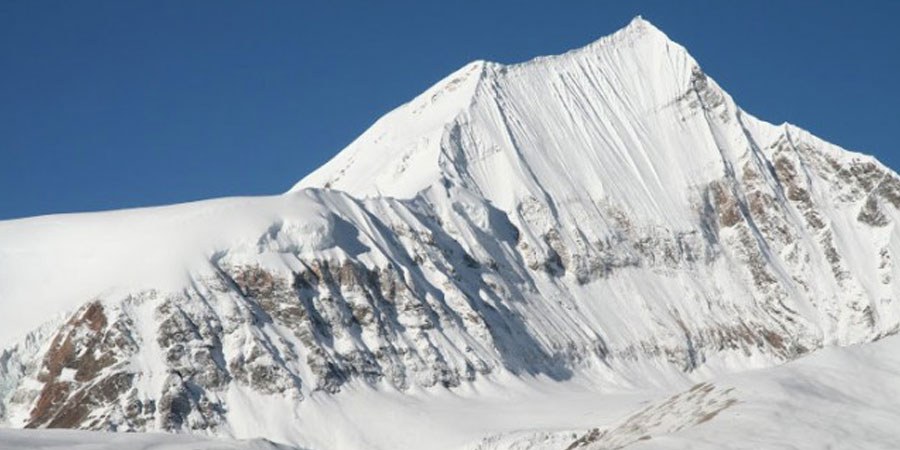
Table of Contents
Introduction to Dhampus Peak Climbing
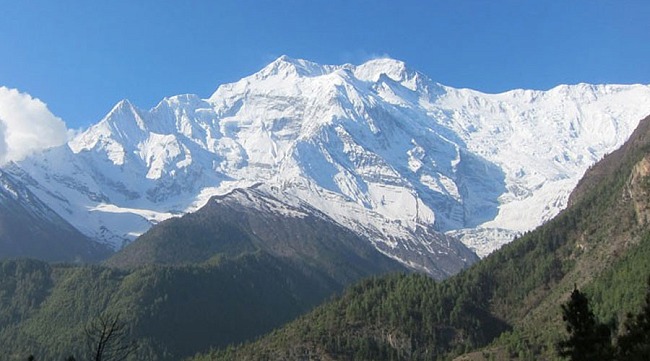
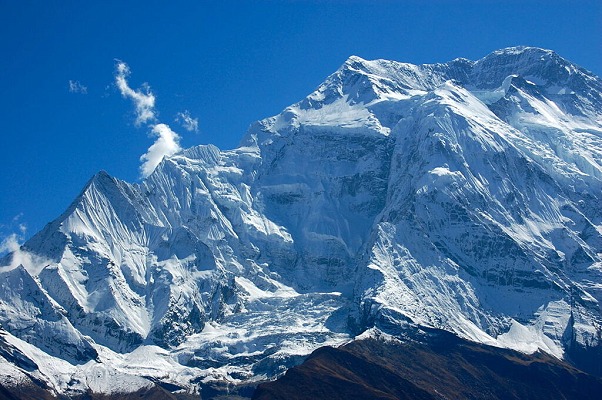
Dhampus Peak, also called Thapa Peak, rises to 6,012 metres (19,724 ft) in Nepal's Dhaulagiri region. The Nepal Mountaineering Association (NMA) lists it as a Group B trekking peak. It sits above the Kali Gandaki valley, the world's deepest gorge, between the Dhaulagiri and Annapurna massifs.
Don't confuse it with Dhampus village near Pokhara. The peak lies on the Mustang side of the Himalaya and is approached from Marpha, not from the Pokhara foothills. That difference matters when you research routes, weather and logistics.
The climb suits trekkers who want a first 6,000-metre summit without the crowds of Island Peak or Mera Peak. You cross the Dhampus (Thapa) Pass, camp high on glacial terrain and summit with views of Dhaulagiri I (8,167m), Tukuche Peak and Nilgiri. You can see the full itinerary and departure dates on the Dhampus Peak Climbing package page.
This guide covers the practical questions in order: cost, permits, difficulty, best season and the day-by-day plan. It also covers gear and how to prepare. Use it to decide whether the peak fits your experience and your budget.
Dhampus Peak Quick Facts
Before the details, here is a snapshot of the climb. These figures come from the standard 9-day package and can shift with weather and route conditions.
| Detail | Information |
|---|---|
| Peak name | Dhampus Peak (Thapa Peak) |
| Summit elevation | 6,012 m / 19,724 ft |
| Region | Dhaulagiri–Annapurna (Mustang side) |
| NMA classification | Group B trekking peak |
| Trailhead | Marpha (2,670 m) |
| Trip length | 9 days including Kathmandu (about 6 days from Pokhara to Pokhara) |
| Accommodation | Hotels in the towns, tents on the mountain |
| Best seasons | Spring (Mar–May) and autumn (Sep–Nov) |
| Grade | Hard (moderate technical difficulty) |
The trek starts at Marpha, the "apple capital" of Mustang, and climbs through Yak Kharka before reaching Dhampus Pass at about 5,240 m. Summit day ends with a long descent to Kalopani, where you return to lodge accommodation.
Compared with other trekking peaks, Dhampus is short and remote. You spend most of the trip in high, quiet terrain rather than on busy teahouse trails. That is a large part of its appeal, and it is also why fitness and acclimatization deserve serious attention.
The peak also makes a good stepping stone. Climbers who finish Dhampus often move on to longer objectives such as Mera Peak or Chulu West with more confidence.
Dhampus Peak Climbing Cost
Prices vary with group size, season and inclusions. The package is listed from about US$2,350 per person, with group-size pricing shown on the trip page. Always confirm the current rate before you book, because fees and departure dates change.
A fully guided package usually bundles several things. Know what is inside the price so you can compare operators fairly.
Typically included:
- Airport transfers and private transport (Kathmandu–Pokhara–Marpha and return)
- Hotel nights in Kathmandu and Pokhara
- A licensed climbing guide, assistant guide and porters
- NMA climbing permit, ACAP permit and TIMS where applicable
- Meals during the trek and climb, plus camping equipment
- Group technical gear such as ropes, plus technical instruction
Typically not included:
- International flights and Nepal entry visa
- Travel and high-altitude rescue insurance
- Personal clothing and technical gear (boots, crampons, harness, helmet)
- Meals in Kathmandu beyond the farewell dinner
- Tips for guides, porters and drivers, and summit bonuses
Budget beyond the package price for personal gear, insurance and tips. If you would rather rent than buy, Kathmandu's Thamel district has rental shops for boots, crampons and down jackets. Set aside a small contingency fund for delays and extra nights.
Low cost alone is a poor way to compare operators. Check that guides are licensed, that porters are insured and that the itinerary includes sensible acclimatization. A cheaper package that skips these things costs more if you have to turn back or need evacuation.
Dhampus Peak Permits and Regulations
Climbing Dhampus Peak requires more than one permit. Because it is an NMA peak, you need an NMA climbing permit and you must go with a registered guide or sirdar. Licensed agencies arrange these documents for you, so do not try to organize them alone.
| Permit | Issued by | Notes |
|---|---|---|
| Peak climbing permit | Nepal Mountaineering Association (NMA) | Fee varies by season |
| Annapurna Conservation Area Permit (ACAP) | ACAP / NTNC | Needed for the conservation area |
| TIMS card | Trekking authorities | Where applicable |
| Garbage deposit | NMA | Refundable under NMA rules |
NMA permit prices depend on the season, with spring costing more than autumn, and the fee structure was revised in 2025. Recent sources put trekking peak permits at roughly US$175–350 per person depending on the season. Peak-specific figures differ between sources, so ask your agency for the exact current fee.
Nepal's authorities also expect climbers to follow waste and safety rules. NMA requires teams to bring rubbish down and leave no fixed ropes or pitons behind. Extending a permit costs extra for each additional week.
Bring your passport, insurance documents and permit copies in a waterproof folder. Your guide will handle check-posts, but you should still know which documents you hold. Confirm that your insurance policy covers climbing at 6,000 metres and helicopter evacuation.
How Difficult Is Dhampus Peak?
Dhampus Peak is a hard, high-altitude objective, but it is not a highly technical one. Most climbers describe it as moderate to challenging. Expect steep snow slopes, some ice and a long summit day of about 8 to 10 hours.
The main challenge is altitude and remoteness, not rope work. You gain height fast after Marpha, cross a high pass and sleep in tents. Cold, wind and thin air will test you more than any single climbing move.
Some technical skill still helps. You should be comfortable with these basics:
- Walking in crampons on snow and mixed ground
- Using an ice axe for balance and self-arrest
- Wearing a harness and following fixed-rope procedures
- Moving in a roped team when conditions require it
Fitness matters as much as skill. Build endurance with long hikes, stair or hill training and weighted pack work for at least 8 to 12 weeks beforehand. Previous trekking above 4,000 metres is a strong advantage.
One honest caution about the short itinerary. The standard 9-day plan climbs from Marpha (2,670m) to Yak Kharka (3,900m) and then to Dhampus Pass (5,240m) on consecutive days. That is a large elevation gain, well above the commonly cited guideline for sleeping altitude. If you are new to altitude, ask for extra acclimatization days or spend time at elevation before the trip.
Best Season for Dhampus Peak Climbing
Spring (March to May) and autumn (September to November) are the best seasons. Skies are usually clear, temperatures are workable and snow conditions are more predictable. Both seasons also give the best views of Dhaulagiri and Annapurna.
| Season | Months | Conditions | Verdict |
|---|---|---|---|
| Spring | Mar–May | Stable weather, warmer days, good visibility | Excellent |
| Summer / Monsoon | Jun–Aug | Cloud and rain, though Mustang gets less than southern Nepal | Not recommended |
| Autumn | Sep–Nov | Clear, dry, cold nights, reliable views | Excellent |
| Winter | Dec–Feb | Very cold, heavy snow on the pass, short days | Experienced climbers only |
Autumn is the most popular choice, and October brings the most stable weather. Spring offers longer days and warmer valleys but can bring afternoon wind and cloud. Both seasons book quickly, so reserve early.
The Mustang side of the Himalaya sits in a rain shadow, so it stays drier than the southern Annapurna slopes. That makes the monsoon months less hopeless than they are elsewhere in Nepal. High passes can still be cloudy and slippery, and summit visibility suffers, so most climbers avoid them.
Winter departures exist but are cold and demanding. Snow depth on Dhampus Pass can slow progress or block the route. If you want a winter attempt, choose a flexible schedule and an experienced guide.
Dhampus Peak Climbing Itinerary
Dhampus Peak Climbing Itinerary at a Glance
The standard Dhampus Peak itinerary runs for nine days. It combines two driving days from Kathmandu, a short approach trek from Marpha, a high camp on Dhampus Pass and a single summit day. The table below summarizes every stage so you can compare elevation, distance, travel time and accommodation in one place.
The plan works well for climbers with limited time. Most of the height is gained in three days, from Marpha to Yak Kharka and then to the pass, so the schedule is efficient but demanding. If you are new to altitude, ask your operator about extra acclimatization days before you book.
All figures are approximate. Drive times depend on road conditions, and trekking times depend on weather, snow and your group's pace. A good guide will adjust the plan to protect your safety and your summit chances rather than follow a rigid timetable.
Use the table as a planning reference, then read the day-by-day breakdown in the next section. You can also check live departure dates and pricing on the Dhampus Peak Climbing trip page.
| Day | Route / Activity | Elevation | Distance | Duration | Accommodation | Meals |
|---|---|---|---|---|---|---|
| 1 | Arrive in Kathmandu, transfer to hotel | 1,340 m / 4,396 ft | 5–6 km | 30 min | Hotel | Breakfast |
| 2 | Drive Kathmandu to Pokhara | 950 m / 3,117 ft | 200–210 km | 6–7 hrs | Hotel | Breakfast |
| 3 | Drive Pokhara to Marpha | 2,670 m / 8,760 ft | 150–160 km | 7–8 hrs | Hotel | Breakfast, lunch, dinner |
| 4 | Trek Marpha to Yak Kharka | 3,900 m / 12,795 ft | 10–12 km | 5–6 hrs | Tent | Breakfast, lunch, dinner |
| 5 | Trek Yak Kharka to Dhampus Pass | 5,240 m / 17,191 ft | 8–10 km | 6–7 hrs | Tent | Breakfast, lunch, dinner |
| 6 | Summit Dhampus Peak, descend to Kalopani | 6,012 m / 19,724 ft (summit); 3,920 m / 12,861 ft (Kalopani) | 10–12 km | 8–10 hrs | Hotel | Breakfast, lunch, dinner |
| 7 | Drive Kalopani to Pokhara | 950 m / 3,117 ft | 120–140 km | 6–7 hrs | Hotel | Breakfast, lunch |
| 8 | Drive Pokhara to Kathmandu | 1,340 m / 4,396 ft | 200–210 km | 6–7 hrs | Hotel | Breakfast, dinner |
| 9 | Final departure from Kathmandu | 1,340 m / 4,396 ft | 5–6 km | 30 min | Hotel | Breakfast |
Dhampus Peak Climbing Detail Itinerary
Below is the full breakdown of each day, including what to expect on the road and the trail. Kalopani is also written Kalapani on some maps and websites.
Day 1: Arrival in Kathmandu (1,340 m / 4,396 ft)
A representative from Unique Sherpa Trek meets you outside the arrivals area, holding a nameplate. After a short welcome, you transfer to your hotel in Kathmandu, which takes about 30 minutes over roughly 5–6 km. You have the rest of the day to rest and recover from the flight.
This is a good time to check your gear. Bring boots, crampons, harness and clothing to the hotel so your guide can check them, and sort out any rentals in nearby Thamel. Confirm your insurance and keep copies of your passport and permit documents.
- Elevation: 1,340 m
- Accommodation: Hotel
- Meals: Breakfast
Day 2: Drive to Pokhara (950 m / 3,117 ft)
Today you leave Kathmandu for Pokhara, a drive of 200–210 km that takes 6–7 hours. The road follows the Trishuli and Marsyangdi river valleys, with terraced hills and small towns along the way. Traffic and roadworks can lengthen the trip, so start early.
You arrive in the Pokhara valley, beside Phewa Lake. Lakeside has restaurants, shops and cafés, and it makes a relaxed stop before the mountain section begins. If you have energy left, a short evening walk along the lake is a pleasant way to stretch your legs.
- Elevation: 950 m
- Distance: 200–210 km
- Accommodation: Hotel
- Meals: Breakfast
Day 3: Drive from Pokhara to Marpha (2,670 m / 8,760 ft)
Today's 150–160 km drive takes 7–8 hours. The road runs through Beni, Tatopani and Ghasa before arriving at Marpha in the Kali Gandaki valley. The landscape changes noticeably as you climb, from green subtropical hills to drier, more open terrain.
Marpha is known for its apple orchards and whitewashed stone houses. You spend the night here at 2,670 m, which is the first real step up in altitude. Drink plenty of water and go easy on food and effort this evening, because your body is beginning to adjust.
- Elevation: 2,670 m
- Distance: 150–160 km
- Accommodation: Hotel
- Meals: Breakfast, lunch and dinner
Day 4: Trek from Marpha to Yak Kharka (3,900 m / 12,795 ft)
The trek begins today. You cover 10–12 km in about 5–6 hours, climbing steadily away from the valley floor. The trail passes through forest and alpine meadow, with open views of the surrounding peaks. Take regular breaks and walk slowly.
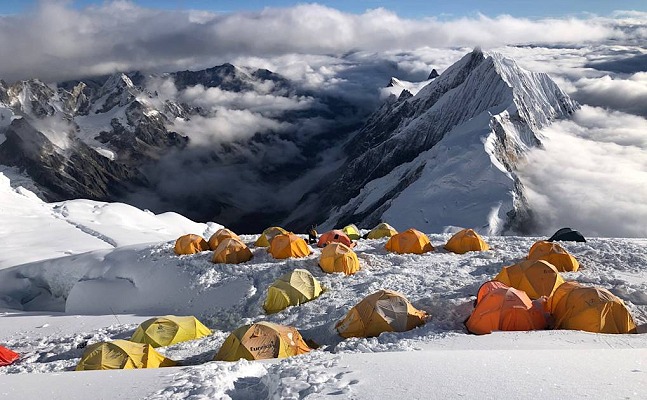
You camp at Yak Kharka, a grazing area at 3,900 m. This is the first night in tents, and temperatures drop sharply after sunset. The gain of more than 1,200 m from Marpha is large, so tell your guide immediately if you develop a headache, nausea or unusual fatigue.
- Elevation: 3,900 m
- Distance: 10–12 km
- Duration: 5–6 hours
- Accommodation: Tent
- Meals: Breakfast, lunch and dinner
Day 5: Trek from Yak Kharka to Dhampus Pass (5,240 m / 17,191 ft)
This is the hardest approach day. You climb 8–10 km in about 6–7 hours, moving from grassland into rock, moraine and snow. The air gets thinner with every hour, so a slow and steady rhythm matters more than speed.
You reach Dhampus Pass at 5,240 m and camp there. Expect cold, wind and a restless night, since sleeping at this height is difficult for most people. Your guide will check how the group is feeling before confirming the summit plan. Note that the jump from 3,900 m to 5,240 m is steep, and an extra acclimatization day here improves both safety and success rates if your operator can offer one.
- Elevation: 5,240 m
- Distance: 8–10 km
- Duration: 6–7 hours
- Accommodation: Tent
- Meals: Breakfast, lunch and dinner
Day 6: Summit Dhampus Peak (6,012 m / 19,724 ft) and Descend to Kalopani (3,920 m / 12,861 ft)
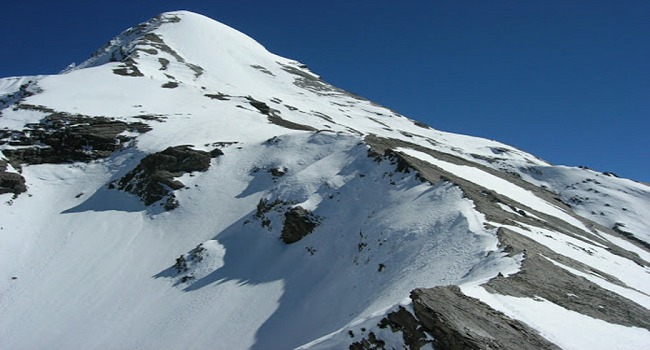
Summit day starts very early, usually well before sunrise, so you climb by headlamp. The route crosses snow slopes and steeper sections where you will use crampons, an ice axe and fixed ropes if conditions call for them. You typically reach the top around midday, depending on pace and weather.
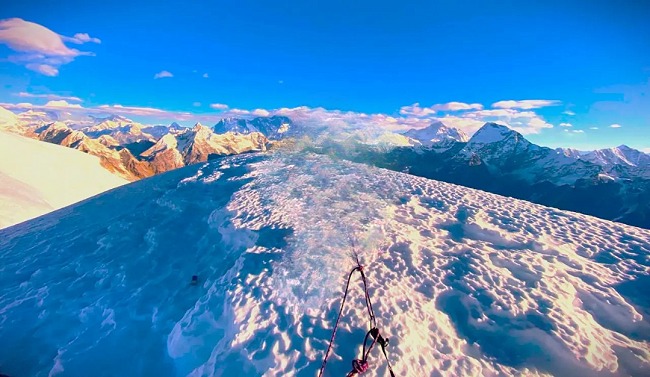
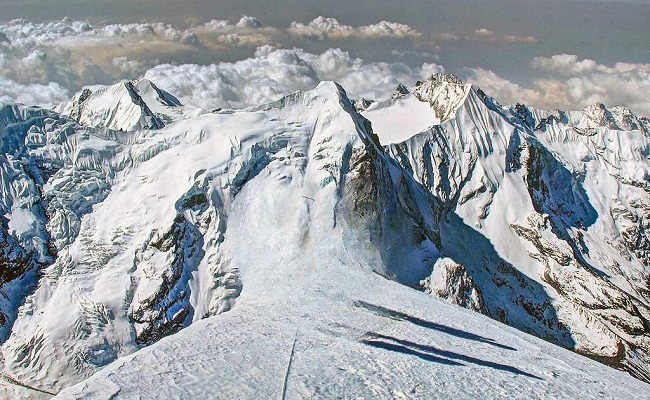
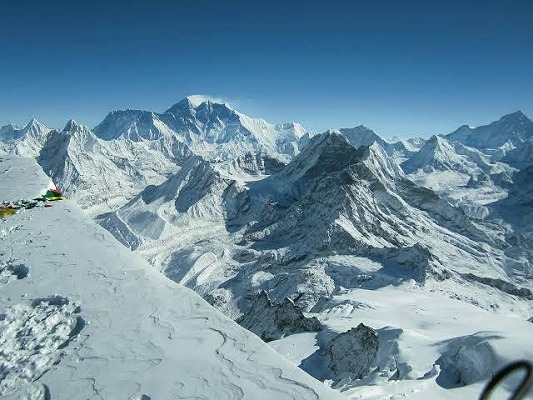
From the summit at 6,012 m you can see Tukuche Peak, Dhaulagiri I (8,167 m), Nilgiri and the wider Annapurna range. Take photos, but do not linger, because winds and clouds can build quickly. The long descent to Kalopani covers 10–12 km and the whole day takes 8–10 hours, so save some energy for the way down.
You finish the day in a lodge at Kalopani (3,920 m), where a warm meal and a proper bed are welcome after two nights in tents.
- Summit elevation: 6,012 m
- Overnight elevation: 3,920 m
- Distance: 10–12 km
- Duration: 8–10 hours
- Accommodation: Hotel
- Meals: Breakfast, lunch and dinner
Day 7: Drive from Kalopani to Pokhara (950 m / 3,117 ft)
The trekking is finished, and today is a scenic drive of 120–140 km in about 6–7 hours. The road follows the Kali Gandaki valley downstream, and you drop back into warmer, greener country. Sit back and enjoy the descent, and rest well after the summit push.
You arrive in Pokhara in the afternoon and stay near Lakeside. Many groups celebrate the climb here with a relaxed dinner and drinks by the lake. It is also a good time to thank your guide and porters.
- Elevation: 950 m
- Distance: 120–140 km
- Duration: 6–7 hours
- Accommodation: Hotel
- Meals: Breakfast and lunch
Day 8: Drive from Pokhara to Kathmandu (1,340 m / 4,396 ft)
You return to Kathmandu by road, a 200–210 km drive that takes 6–7 hours. Use the trip to look back over the route and share photos with your group. Road conditions can affect timing, so avoid tight onward connections if you can.
In the evening, the team hosts a farewell dinner with traditional Nepali food. This is a good chance to give feedback, exchange contact details and hand out tips to guides, porters and drivers.
- Elevation: 1,340 m
- Distance: 200–210 km
- Duration: 6–7 hours
- Accommodation: Hotel
- Meals: Breakfast and dinner
Day 9: Final Departure from Kathmandu (1,340 m / 4,396 ft)
A team member transfers you to Tribhuvan International Airport for your onward flight, a trip of about 30 minutes. Allow generous time for check-in and security. If you want to stay longer in Nepal, ask your operator about extra nights or sightseeing in the Kathmandu Valley.
To reserve a spot on the itinerary above, visit the Dhampus Peak Climbing package page and send an enquiry.
- Elevation: 1,340 m
- Accommodation: None (departure)
- Meals: Breakfast
The trek starts in the Kali Gandaki valley, where apple orchards give way to alpine meadows and rocky slopes. Above Yak Kharka the terrain turns to moraine and snow. Camps are simple and cold, so a four-season sleeping bag matters.
Summit day begins very early, usually before sunrise. Reaching the top around midday is typical, with views of Tukuche Peak, Dhaulagiri I and Nilgiri. The descent to Kalopani is long and tiring, so pace yourself on the way up.
Every timing on this itinerary depends on weather and how your group is acclimatizing. Good guides adjust the plan rather than push to a fixed schedule. You can view the full day-by-day breakdown and upcoming departures on the official itinerary page.
Gear, Training and Safety Tips
Pack for cold, wind and snow, and think in layers. A workable system is thermal base layer, fleece mid-layer, down or synthetic jacket and a waterproof shell. Boots and gloves deserve the most attention, since cold hands and feet end more summit attempts than anything else.
Essential personal gear:
- Crampon-compatible mountaineering boots (broken in before the trip)
- 10–12 point crampons and a 50–70 cm ice axe
- Harness, helmet and locking carabiners
- Four-season sleeping bag and insulated mat
- Insulated jacket, shell layers, warm gloves or mittens
- Glacier sunglasses, goggles, sunscreen and a headlamp with spare batteries
Some technical group gear, such as ropes and camping equipment, is usually supplied by the agency. Confirm exactly what is included before departure, and rent in Kathmandu if you would rather not buy expensive items.
Altitude sickness is the biggest safety risk. Learn the early signs of altitude illness (persistent headache, nausea, dizziness and unusual fatigue) and tell your guide immediately. Never ignore symptoms to keep to the schedule, and descend if they worsen. Talk to a doctor about altitude medication before you travel rather than deciding on the mountain.
Travel insurance is non-negotiable. It must cover mountaineering to 6,000 metres and emergency helicopter evacuation. Carry a personal first-aid kit, water purification tablets and enough medication for the whole trip.
Dhampus Peak Climbing: FAQs
1. Where is Dhampus Peak located?
Dhampus Peak (also called Thapa Peak) is in Nepal's Dhaulagiri region, on the Mustang side of the Himalaya. It rises above the Kali Gandaki valley between the Dhaulagiri and Annapurna massifs. It is not the same as Dhampus village near Pokhara, and the climb starts from Marpha.
2. How high is Dhampus Peak?
The summit stands at 6,012 metres (19,724 ft). On the standard route you also cross Dhampus Pass at about 5,240 metres, where high camp is set before the summit push.
3. Is Dhampus Peak a trekking peak or an expedition peak?
It is a Group B trekking peak managed by the Nepal Mountaineering Association (NMA). The label does not mean easy: you still face snow, ice, cold and thin air above 5,000 metres.
4. How difficult is the Dhampus Peak climb?
It is generally rated moderate to challenging. The main difficulty is altitude, remoteness and a long summit day of about 8 to 10 hours, rather than technical rock or ice climbing. You should be comfortable in crampons, with an ice axe and on fixed ropes.
5. Can a beginner climb Dhampus Peak?
A complete beginner should not attempt it without preparation. Previous trekking above 4,000 metres and a basic mountaineering course make a big difference. If you are new to altitude, ask for extra acclimatization days or build experience on a smaller trip first.
6. How long does the Dhampus Peak climb take?
The standard package runs for 9 days, including arrival and departure in Kathmandu. That is about 6 days from Pokhara back to Pokhara. Many climbers add one or two acclimatization days for safety, which makes 10 to 11 days a comfortable plan.
7. What is the best time to climb Dhampus Peak?
Spring (March to May) and autumn (September to November) are best, with stable weather and clear views. Autumn, especially October, is the most popular. Summer brings cloud and rain, and winter is very cold with heavy snow on the pass.
8. How much does Dhampus Peak climbing cost?
The package is listed from about US$2,350 per person, with group-size pricing available on the Dhampus Peak Climbing trip page. Prices change by season and group size, so confirm the current rate before booking. Budget separately for flights, visa, insurance, personal gear and tips.
9. What permits do I need for Dhampus Peak?
You need an NMA climbing permit and an Annapurna Conservation Area Permit (ACAP), plus a TIMS card where applicable. NMA fees vary by season and were revised in 2025, so ask your agency for the exact current figure. A licensed operator arranges all of these for you.
10. What is included in the package price?
Usually airport transfers, private transport, hotels, a licensed guide, porters, permits, meals during the trek, camping equipment, group technical gear and staff insurance. It typically excludes international flights, visa, travel insurance, personal clothing and technical gear, and tips. Always read the inclusions list and compare it with other operators.
11. What gear do I need to bring?
At minimum: crampon-compatible mountaineering boots, crampons, an ice axe, harness, helmet, a four-season sleeping bag, an insulated jacket, waterproof shell layers, warm gloves, glacier sunglasses and a headlamp. Kathmandu's Thamel district has rental shops if you would rather not buy expensive items. Confirm with your operator what group equipment is provided.
12. How do I prepare physically for the climb?
Train for 8 to 12 weeks before departure with long hikes, hill or stair work and weighted pack sessions. Build cardiovascular endurance and leg strength, and practice walking for 6 to 8 hours in a row. Previous altitude exposure is a strong advantage.
13. What is the risk of altitude sickness, and how is it managed?
The risk is real, because the itinerary gains height quickly from Marpha (2,670 m) to Yak Kharka (3,900 m) and then to the pass (5,240 m). Learn the early signs, such as persistent headache, nausea, dizziness and unusual fatigue, and tell your guide at once. Descend if symptoms worsen, and talk to a doctor before the trip about altitude medication.
14. Do I need travel insurance?
Yes, it is essential. Your policy must cover mountaineering up to 6,000 metres and emergency helicopter evacuation. Check the wording carefully, because many standard policies exclude high-altitude climbing.
15. Can I climb Dhampus Peak without a guide?
No. NMA rules require every climbing permit to be accompanied by a registered guide or sirdar, and foreign climbers must apply through a registered agency. A guide also handles route conditions, weather decisions and safety on summit day. To reserve a spot or ask about departures, send an enquiry through the official trip page.
Final Thoughts: Is Dhampus Peak Right for You?
Dhampus Peak is a strong choice if you have trekked at altitude and want a real summit without a big-expedition budget. It offers remote scenery, dramatic views of two of the world's great massifs and a manageable technical level. It is also a fine preparation climb for larger peaks.
It is not a casual walk. The altitude gain, cold and long summit day demand honest preparation, good gear and a guide you trust. Train early, add acclimatization time and choose a season when conditions favor you.
Before you commit, compare operators on guide licensing, staff insurance, itinerary flexibility and clarity about inclusions. Check the current permit fees, since Nepal's rules have been changing. Ask direct questions and expect clear answers.
Ready to plan? Explore dates, pricing and inclusions on the Dhampus Peak Climbing trip page and send an enquiry to the team. A clear plan, the right season and proper preparation give you the best chance of standing on top at 6,012 metres.