


Lobuche East vs Island Peak: Which Everest Region Peak Should You Climb First?
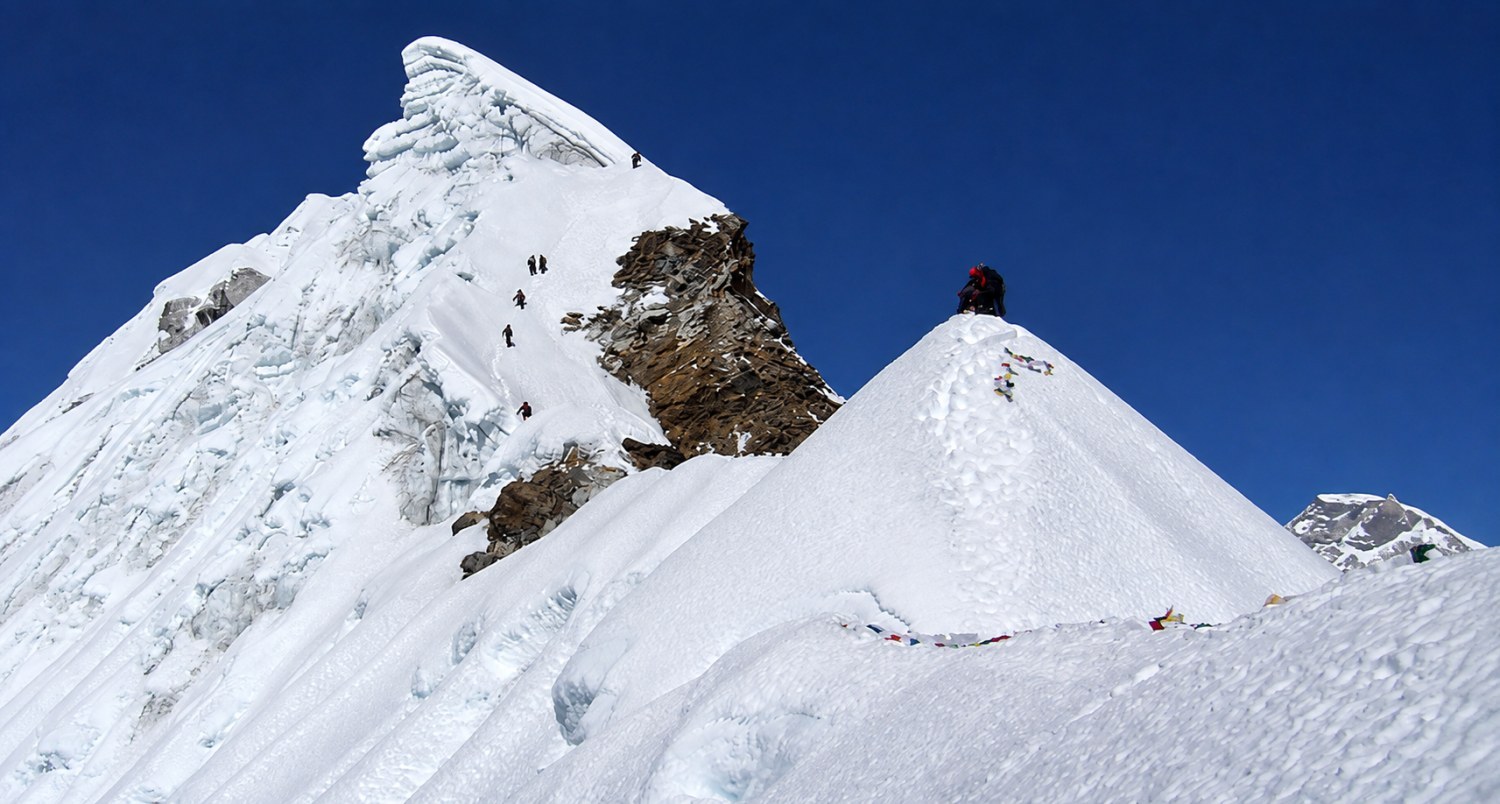
Table of Contents
You are standing in the Khumbu Valley, the air is thin, and two Himalayan summits are calling you. One rises above the Khumbu Glacier near Lobuche village with Everest and Nuptse on its shoulder. The other sits above the Imja valley beyond Chhukung, framed by the huge south face of Lhotse. Both are just over 6,000 metres. Both are officially classed as trekking peaks. And almost every first-time climber asks us the same question: Lobuche East or Island Peak, which one should I climb first?
This guide answers it honestly, from the point of view of Sherpa guides who lead climbers on both mountains. We compare height, difficulty, route, summit day, views, season and preparation, and then give you a clear way to choose.
The Quick Answer
- Choose Island Peak (Imja Tse, 6,189 m) if you want the classic first Himalayan summit: a glacier approach, a steep headwall on fixed ropes, and a long but well-trodden summit day from base camp.
- Choose Lobuche East (6,119 m) if you want closer views of Everest, a route that combines naturally with the Everest Base Camp trek, and a steeper, more sustained climb above a high camp.
- If you are completely new to ice and rope work, either peak is realistic with a good guide, proper training and enough acclimatisation days. What matters most is your fitness, your itinerary and your guide team, not the peak you pick.
Keep reading and you will see exactly why.
Lobuche East vs Island Peak at a Glance
Feature | Lobuche East | Island Peak (Imja Tse) |
|---|---|---|
Summit height | 6,119 m (20,075 ft) | 6,189 m (20,305 ft) |
Region | Khumbu, above Lobuche village | Khumbu, Imja valley beyond Chhukung |
Classification | Nepal trekking peak (NMA) | Nepal trekking peak (NMA) |
Base camp | About 4,900 to 5,000 m | About 5,100 m |
High camp | Yes, on rocky ground above base camp | Optional, many climbers go from base camp |
Summit day | Shorter, steeper and more sustained | Longer, with more total ascent from base camp |
Key obstacles | Rock scramble, steep snow and ice on fixed lines, narrow summit ridge | Glacier crossing, steep snow and ice headwall, summit ridge |
Main views | Everest, Lhotse, Nuptse, Pumori, Ama Dablam, Cholatse | Lhotse, Makalu, Baruntse, Ama Dablam, Nuptse |
Best season | April to May, late September to November | April to May, late September to November |
Typical trip length | About 17 to 19 days with an Everest Base Camp trek | About 16 to 19 days |
Heights and camp elevations are approximate and can vary slightly by source and by season.
Lobuche East: The Everest-Facing Climb
Lobuche East rises above the Khumbu Glacier, a short walk from Lobuche village on the classic Everest Base Camp trail. That location is its greatest strength. You can combine the climb with Everest Base Camp and Kala Patthar, which gives you proper acclimatisation before you ever put crampons on.
The climb itself starts with a rocky approach to base camp, followed by a steep scramble to high camp. Most teams sleep at high camp so that summit day is shorter. From there the route follows snow and ice slopes, with fixed ropes through the steeper sections, and finishes on a narrow summit ridge. At the top you stand almost eye to eye with Everest, Lhotse and Nuptse, with Pumori, Ama Dablam and Cholatse completing the panorama.
Lobuche East is a separate summit from Lobuche West. West is a different and more technical objective, so make sure your permit and your itinerary say Lobuche East.
For a deeper look at the technical side, read our guide to Lobuche East Peak climbing difficulty, technical skills and training.
Island Peak: The Classic First 6,000er
Island Peak, also called Imja Tse, earned its English name because early explorers saw it rising like an island from a sea of ice in the Imja valley. It is the most famous trekking peak in Nepal for good reason: the route is clear, the guiding system is mature, and the mountain offers a genuine mix of glacier travel, steep ice and ridge climbing.
Most climbs start from Island Peak Base Camp. After a rocky approach, you reach the glacier, where crampons and rope work begin. The mountain then rewards you with the famous headwall, a steep snow and ice face of roughly 100 metres that is climbed on fixed ropes, before the final summit ridge. Summit day is long, often ten to twelve hours round trip from base camp, and the total ascent is bigger than on Lobuche East because many teams climb straight from base camp.
From the summit you look straight at the Lhotse south face, with Makalu, Baruntse and Ama Dablam spread around you. Everest is visible but partly hidden behind the Nuptse-Lhotse wall.
Compare it with the cost and trip plan on our Island Peak Climbing page.
Which Is Harder?
Honest answer: it depends on what kind of difficulty you struggle with.
Technical difficulty
Lobuche East is generally considered the more technical climb. The slopes are steeper and more sustained, the rock sections need confidence with crampons, and the summit ridge is narrow and exposed. Island Peak has one famous steep section, the headwall, plus a glacier with crevasses, but long stretches are less steep.
Both climbs rely on fixed ropes, an ascender (jumar), a harness and a guide who knows the conditions of the season. You do not need to be a rock climber for either one.
Physical and altitude demands
Island Peak asks more of your legs and lungs on summit day. You start from a higher base camp and climb a larger vertical gain in a single push, then walk all the way back down. Lobuche East splits the effort with a high camp, so summit day is shorter, but the night at high camp is cold and the altitude is real.
In short: Lobuche East is steeper, Island Peak is longer.
Weather and exposure
Both peaks are exposed to wind and cold at the top. Temperatures on summit day are typically far below freezing, and conditions can change fast. Early starts are normal, and your guide may delay or turn around the team if the weather or the snow conditions are poor. That is a sign of good guiding, not a failed trip.
The Views: Which Summit Wins?
If your dream is a close-up view of Everest, Lhotse and Nuptse, Lobuche East wins. You see the roof of the world from the heart of the Khumbu.
If you want an alpine-style panorama with Lhotse, Makalu, Baruntse and Ama Dablam filling the sky, Island Peak wins. Its summit is a more isolated viewpoint, and the Imja valley below looks like another planet.
Acclimatisation and Itinerary
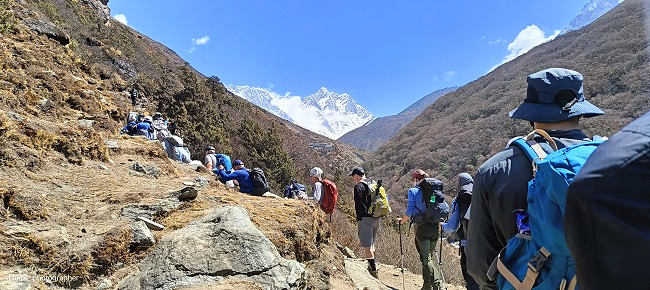
Both climbs follow the same logic: fly to Lukla, trek slowly through Phakding, Namche Bazaar and Tengboche, take proper rest days, and gain altitude gradually. The routes then split. For Lobuche East you continue through Dingboche to Lobuche, then move to base camp. For Island Peak you go through Dingboche and Chhukung before reaching Island Peak Base Camp.
The real secret of a successful climb is time. Trips that add acclimatisation days, a rest day before the summit push and buffer days for weather have much higher success rates than rushed schedules. If you want to add the Everest Base Camp trek, the Lobuche route is the natural fit. If you prefer a high-pass adventure, Island Peak links well with the Amphu Lapcha Pass Trek.
For the full day-by-day plan, see our Lobuche Peak climbing 2027 cost and itinerary guide.
Cost and Permits
Both peaks need a climbing permit from the Nepal Mountaineering Association (NMA), plus Sagarmatha National Park and local municipality entry permits. NMA fees are higher in spring and lower in autumn, so the season you choose affects the final cost. Your package price also depends on trip length, group size, guide and porter support, equipment rental, accommodation and whether you include the Everest Base Camp trek.
For the latest numbers, read our Peak Climbing Permit Fees in Nepal guide or send us your dates for a clear quote.
So, Which One Should You Climb First?
Use this simple decision guide:
- Pick Lobuche East first if you want Everest in your summit photos, you like the idea of a high camp and a shorter summit day, and you are comfortable with steeper snow and ice.
- Pick Island Peak first if you want the classic Nepal peak experience, you prefer a longer but less sustained climb, and you want a strong stepping stone toward bigger mountains.
- Pick based on your schedule, not only your ego: if you plan to trek to Everest Base Camp anyway, Lobuche East fits better. If you want a quieter valley and a high-pass combination, Island Peak fits better.
- Want both? Climbing the two peaks in one journey is possible, but it needs a longer itinerary with extra rest and acclimatisation days. We only recommend it for climbers with a strong fitness base and previous high-altitude experience.
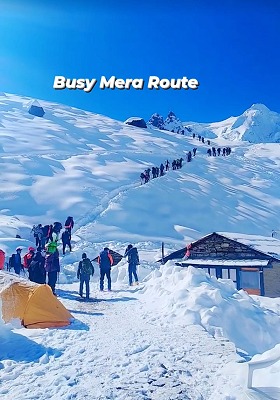
- Still building confidence? A non-technical warm-up such as Mera Peak is a smart first step. Our Mera Peak tips for first-time climbers explain how to prepare.
Training and Gear Essentials
Start preparing three to four months before departure. Focus on aerobic endurance (hiking, running, cycling), leg strength (stairs, lunges, squats) and long days with a weighted pack. Practise walking for six to eight hours on consecutive days.
Your guide will teach you fixed-rope skills, ascender use and crampon technique at base camp before the climb, but arriving with some experience makes everything smoother.
Essential climbing gear includes:
- Insulated mountaineering boots that fit crampons
- Crampons, ice axe, helmet, harness and ascender
- Layered clothing, a down jacket, shell jacket and pants, warm gloves and a balaclava
- Glacier glasses or goggles with UV protection
- A sleeping bag rated for extreme cold and a headlamp with spare batteries
Technical equipment can be rented in Kathmandu, which keeps your luggage light. Insurance that covers high-altitude climbing and helicopter evacuation is essential.
Safety and Altitude Sickness
Acute mountain sickness (AMS) can affect anyone. Climb slowly, drink plenty of water, tell your guide about any headache, nausea or dizziness, and never ignore symptoms. A good itinerary, a licensed guide, oxygen and a first-aid kit for the team, and a willingness to turn around are the best safety tools in the Himalayas.
Why Climb With Unique Sherpa Trek & Expedition
Unique Sherpa Trek & Expedition Pvt. Ltd. is a Kathmandu-based trekking and mountaineering company with about 19 years of experience in Nepal tourism. We are a member of the Trekking Agencies' Association of Nepal (TAAN) and the Nepal Mountaineering Association (NMA), affiliated with the Nepal Tourism Board, and we are a Tripadvisor Travelers' Choice award winner. Our Sherpa guides know Lobuche East and Island Peak intimately, and we build each itinerary around safe acclimatisation and a realistic summit window.
Frequently Asked Questions
1. Is Lobuche East harder than Island Peak?
Lobuche East is usually considered more technical because its slopes are steeper and more sustained, and the summit ridge is narrow. Island Peak is physically longer on summit day, with a bigger total ascent from base camp and a famous headwall near the top. Climbers who dislike exposure often prefer Island Peak, while climbers who struggle with long days at altitude often find Lobuche East easier on the body.
2. Which peak is better for beginners?
Both are achievable for fit beginners with a good guide, and both are common first 6,000-metre peaks. Island Peak is traditionally called the classic first peak because its route is well known and its steep section is short. Lobuche East is a step up in technical effort. If you have no mountaineering experience at all, a warm-up trek or a non-technical peak first can build confidence.
3. Do I need previous climbing experience?
No advanced experience is required, but you need good fitness, previous multi-day trekking at altitude if possible, and the willingness to learn basic skills. Your guide will train you on crampons, fixed ropes and the ascender before the climb. Comfort with heights and cold is more important than technical skill.
4. How high are Lobuche East and Island Peak?
Lobuche East stands at 6,119 metres (20,075 feet) and Island Peak at 6,189 metres (20,305 feet), so Island Peak is about 70 metres higher. The base camps are also different: Lobuche East base camp is slightly lower, while Island Peak base camp is higher and sees a bigger ascent on summit day.
5. How long is summit day on each peak?
Island Peak summit day is often ten to twelve hours round trip from base camp, starting around midnight or early morning. Lobuche East is typically shorter from high camp, often around seven to ten hours round trip, but the climbing is steeper. Timing depends on weather, snow conditions and the pace of the group.
6. What is the best time to climb Lobuche East or Island Peak?
The two best seasons are spring (April to May) and autumn (late September to November). Autumn offers clear skies and stable conditions, while spring offers warmer temperatures and longer days. Winter and monsoon are possible for experienced teams but come with extreme cold, deep snow or heavy rain.
7. How should I train for these climbs?
Begin three to four months before departure. Combine cardio (hiking, running, cycling), leg strength (stairs, squats, lunges) and long back-to-back hikes with a loaded pack. Add practice with a headlamp in the cold if you can, and get a medical check-up. Strong endurance matters more than gym strength.
8. What permits do I need?
You need an NMA climbing permit for the peak, a Sagarmatha National Park entry permit and a local Khumbu municipality permit, along with your Nepal visa and trekking registration. Fees vary by season. We handle the permit process as part of our package. See our Peak Climbing Permit Fees in Nepal guide for details.
9. Can I combine the climb with the Everest Base Camp trek?
Yes, and it is one of the best ways to prepare. Lobuche East sits on the Everest Base Camp route, so a combined trip works naturally and gives you excellent acclimatisation. Island Peak can also be combined with Everest Base Camp or the Three High Passes, but the route takes you through Chhukung instead of Lobuche. Browse our Everest Base Camp Trek.
10. How much do Lobuche East and Island Peak cost?
The cost depends on season, trip length, group size, guide and porter services, gear rental and whether you add the Everest Base Camp trek. Permit fees are higher in spring than in autumn. Read our Lobuche Peak climbing 2027 cost and itinerary guide or contact us for a tailored quote.
Ready to Choose Your First Himalayan Summit?
Whether you pick the steep, Everest-facing ridge of Lobuche East or the glacier-and-headwall adventure of Island Peak, the right preparation and the right guide make all the difference. Explore our Lobuche Peak Climbing and Island Peak Climbing trips, then message us on WhatsApp at +977 9862854770 or email info@uniquesherpatrek.com. Tell us your dates and experience level, and we will help you choose the peak that fits you best.
.jpg)