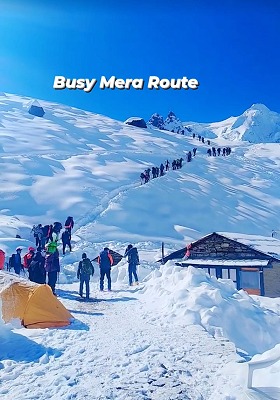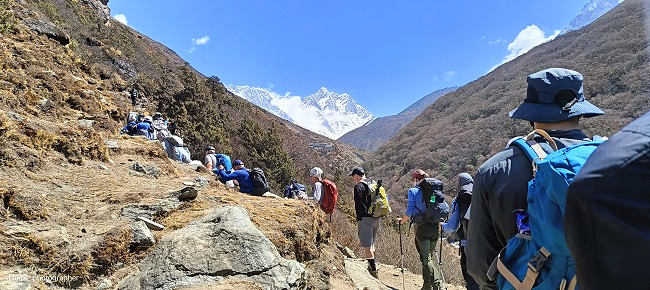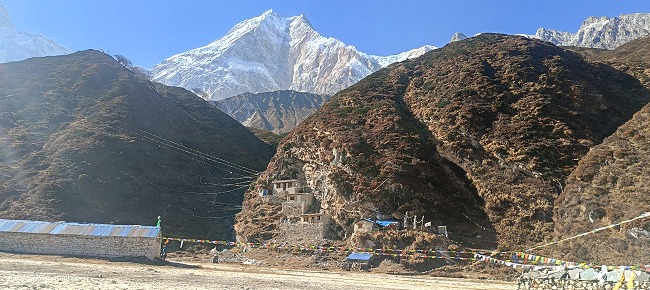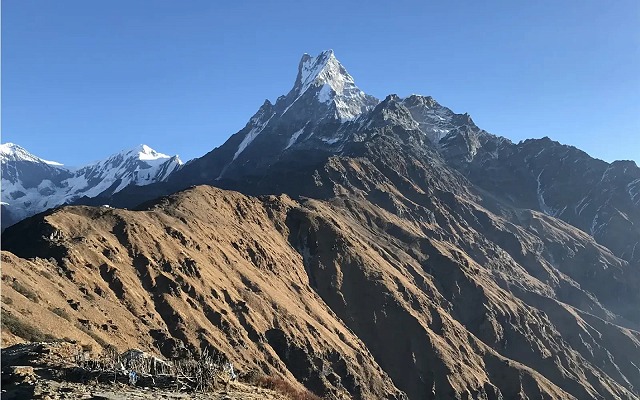



Lobuche Peak Climbing with Everest Base Camp Trek: Route, Itinerary & Summit Guide

Table of Contents
Everest Base Camp is one of the world’s great trekking goals. For many trekkers, it also raises the next question: what comes after? Lobuche Peak (Lobuche East, 6,119 m) is one of the best answers. It sits directly on the Everest Base Camp trail, so you can trek to Everest Base Camp and Kala Patthar first, then climb a real Himalayan summit with the same acclimatization.
This guide covers the route, a day-by-day itinerary, camps, summit day, season, permits, and who this combined adventure suits. If you are also considering a slightly less technical peak, see our Island Peak Climbing option.
Why Combine Lobuche Peak Climbing with Everest Base Camp Trek?
Combining the two trips has clear advantages:
- Built-in acclimatization: By the time you reach Lobuche, you have spent more than a week above 3,500 m and slept near 5,000 m. This improves your odds on the summit.
- One trip, two achievements: You complete Everest Base Camp, Kala Patthar, and a 6,000 m peak in a single schedule.
- Efficient logistics: One flight to Lukla, one permit process, and one team.
- Better value: Combining the two costs less than doing them as separate trips.
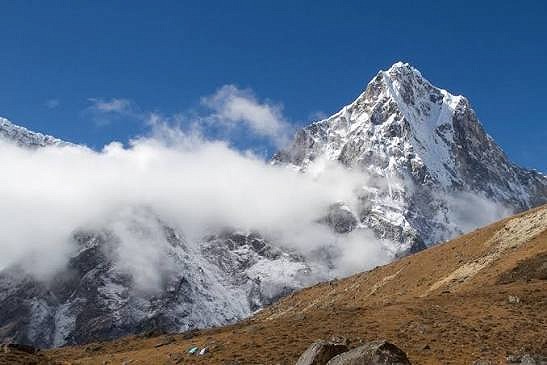
- Stunning scenery: Lobuche East overlooks the Khumbu Glacier, Nuptse, Pumori, Ama Dablam, and the Everest massif.
A trek-first, climb-second schedule also lets you test how your body handles altitude before committing to the technical part.
Lobuche Peak and Everest Base Camp Trek Route
The route follows the classic Everest Base Camp trail and then branches to Lobuche East.
- Lukla to Namche Bazaar: The first days follow the Dudh Koshi valley.
- Namche to Dingboche: You pass Tengboche Monastery and enter the high valleys.
- Dingboche to Lobuche: The trail follows the Khumbu Glacier’s lateral moraine, past the Everest memorials near Thukla.
- Gorak Shep, Everest Base Camp, and Kala Patthar: The high point of the trek.
- Return to Lobuche: Descent to base for the climb.
- Lobuche East Base Camp and High Camp: Technical preparation and the summit push.
- Return to Lukla: Back down the valley with the mountain behind you.
Lobuche Peak Climbing with EBC: Day-by-Day Itinerary
This is a typical 20-day outline. Exact stops may change with weather, flights, and group pace.
| Day | Route | Altitude |
|---|---|---|
| 1 | Arrive in Kathmandu | 1,400 m |
| 2 | Preparation, gear check, and permits | 1,400 m |
| 3 | Fly to Lukla, trek to Phakding | 2,610 m |
| 4 | Phakding to Namche Bazaar | 3,440 m |
| 5 | Acclimatization day in Namche | 3,440 m |
| 6 | Namche to Tengboche | 3,860 m |
| 7 | Tengboche to Dingboche | 4,410 m |
| 8 | Acclimatization day in Dingboche | 4,410 m |
| 9 | Dingboche to Lobuche | 4,910 m |
| 10 | Lobuche to Gorak Shep, then Everest Base Camp | 5,364 m |
| 11 | Kala Patthar sunrise, then descend to Lobuche | 5,545 m |
| 12 | Lobuche to Lobuche East Base Camp, climbing training | about 4,950 m |
| 13 | Base Camp to High Camp | about 5,400 m |
| 14 | Summit Lobuche East, return to Base Camp or Lobuche | 6,119 m |
| 15 | Reserve day for weather | |
| 16 | Trek down to Pangboche or Tengboche | |
| 17 | Descend to Namche Bazaar | 3,440 m |
| 18 | Namche to Lukla | 2,860 m |
| 19 | Fly to Kathmandu | 1,400 m |
| 20 | Departure |
Always confirm the current plan on your operator’s trip page.
Everest Base Camp and Kala Patthar Before the Summit
Reaching Everest Base Camp (5,364 m) and then Kala Patthar (5,545 m) before the peak climb is a major strategic advantage.
Everest Base Camp: You walk onto the Khumbu Glacier and see the expedition tents, the Khumbu Icefall, and the vast surrounding walls. The view of Everest itself is limited from base camp, but the atmosphere is unforgettable.
Kala Patthar: A sunrise climb gives the classic close-up view of Everest, Nuptse, and Lhotse. At more than 5,500 m, it is also a valuable test. If you feel strong here, your body is adapting well.
After these days, you descend to Lobuche to rest, which helps you recover before the technical phase.
Lobuche Peak Base Camp and High Camp
Base Camp (about 4,950 m)
A short walk from Lobuche village. Here, climbing Sherpas and guides usually set up tents, a kitchen, and a dining area. Expect a gear check and a training session covering crampons, ice axe, harness, ascender, and abseiling.
High Camp (about 5,400 m)
A rocky, exposed camp set high on the mountain’s ridge. The climb from base camp involves steep scrambling and loose rock. The camp is basic, cold, and windy, but its position shortens summit day and gives superb views over the Khumbu.
At high camp, rest, eat, and hydrate. Most climbers sleep lightly, so earplugs and warm gear help.
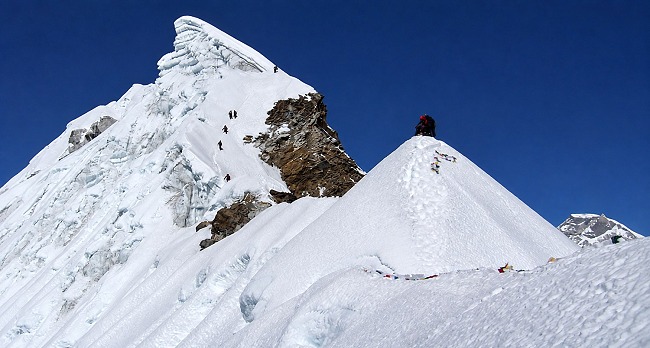
Summit Day: Climbing Lobuche East at 6,119m
Summit day is a serious undertaking and typically begins around midnight to 2:00 AM.
Rock and mixed section: The first part climbs rocky ground by headlamp. Careful footwork and hand use are needed.
Snow and ice slopes: The route reaches steeper snow and ice sections, often with fixed ropes, where you use crampons, an ice axe, and an ascender.
Summit ridge: A narrow ridge with exposure on both sides leads to the top. The final stretch is slow, steep, and cold.
Summit views: On a clear day, you see Everest, Lhotse, Nuptse, Makalu, Ama Dablam, Pumori, and the Khumbu Glacier.
Descent: You descend the same route, often with abseils, and return to high camp or base camp. The whole day usually takes 8 to 12 hours.
Difficulty: Lobuche East is generally considered more technical and demanding than Island Peak, with steeper sections and more sustained exposure. The altitude, cold, and long summit day are the main challenges.
Best Season for Lobuche Peak and Everest Base Camp
Spring (April to May): Warmer temperatures, stable weather, and good snow conditions. Busy, as expedition season is underway.
Autumn (late September to November): Clear skies and excellent visibility. October is popular, though nights are cold.
Winter (December to February): Very cold and windy. Only for experienced climbers.
Monsoon (June to August): Cloud, rain, and unstable conditions. Not recommended.
For most climbers, late April to May and October to early November are the best windows.
Permits, Cost and Climbing Preparation
Permits:
- Nepal Mountaineering Association (NMA) climbing permit for Lobuche East
- Sagarmatha National Park entry permit
- Khumbu local municipality entry permit
Fees change by season and regulation, so confirm current rates before booking. Your operator typically arranges all permits.
Cost depends on:
- Group size and season
- Itinerary length and flights
- Guide, climbing Sherpa, and porter support
- Equipment rental and accommodation
- Meals, tea-house lodging, and camping
Equipment:
- Mountaineering boots, crampons, and ice axe
- Climbing harness, helmet, ascender, and carabiners
- Down jacket, insulated layers, and windproof shell
- A sleeping bag rated to at least -20°C
- Headlamp, gloves, mitts, and glacier glasses
Much of the technical gear can be rented in Kathmandu or Namche.
Preparation:
- Train for 10 to 12 weeks with cardio, leg strength, and weighted hikes
- Practice long days and back-to-back hikes
- Learn basic crampon and rope skills if possible
- See your doctor for a medical check-up
- Buy travel insurance covering climbing up to 6,500 m and helicopter evacuation
Who Can Join This Combined Adventure?
This trip suits:
- Fit trekkers who have done high-altitude treks before
- Climbers looking for a first or second 6,000 m peak
- Adventurers who want Everest Base Camp and a summit in one trip
- People comfortable with basic conditions and cold temperatures
You do not need to be an expert mountaineer, but you need strong fitness, good mental resilience, and willingness to learn technical skills at base camp. If you are new to climbing, Island Peak Climbing can be a gentler first step toward Lobuche.
Altitude Sickness and Safety Tips
- Follow the planned acclimatization days
- Drink 3 to 4 liters of water daily
- Avoid alcohol and smoking
- Tell your guide about any symptoms immediately
- Descend if serious symptoms appear, such as confusion, loss of balance, or severe breathlessness
- Never push on if the weather or conditions are unsafe
Frequently Asked Questions (FAQs)
1. How high is Lobuche Peak?
Lobuche East is 6,119 m (about 20,075 ft).
2. Is Lobuche Peak harder than Island Peak?
Generally yes. It is steeper and more technical, with more sustained exposure.
3. Can I combine Lobuche Peak with Everest Base Camp?
Yes. This is a popular combination because the trek provides acclimatization for the climb.
4. How long does the combined trip take?
Typically around 19 to 21 days, including acclimatization and a buffer day.
5. Do I need previous climbing experience?
Previous high-altitude trekking is strongly recommended. Basic technical skills are taught at base camp.
6. What is the best time to go?
Late April to May and October to early November are the most reliable.
7. Do I need a guide?
Yes. A licensed guide and climbing support are strongly recommended and usually required.
8. How long is summit day?
Usually 8 to 12 hours round trip from high camp.
9. Can I rent climbing equipment?
Yes. Most technical gear is available for rent in Kathmandu and Namche Bazaar.
10. What if the weather prevents a summit attempt?
A reserve day is built in, and your guide decides whether to wait or turn back.
Final Thoughts
Combining Lobuche Peak climbing with the Everest Base Camp trek is one of the most rewarding ways to experience the Khumbu. You walk to the foot of the world’s highest mountain, view it from Kala Patthar, and then stand on a 6,000 m summit above the Khumbu Glacier.
With proper acclimatization, good gear, and an experienced team, it is a challenging but achievable goal. To explore climbing options and plan your adventure, visit Island Peak Climbing.
.jpg)