


Annapurna Base Camp Trek Accommodation & Meals: Complete Guide 2026-2027
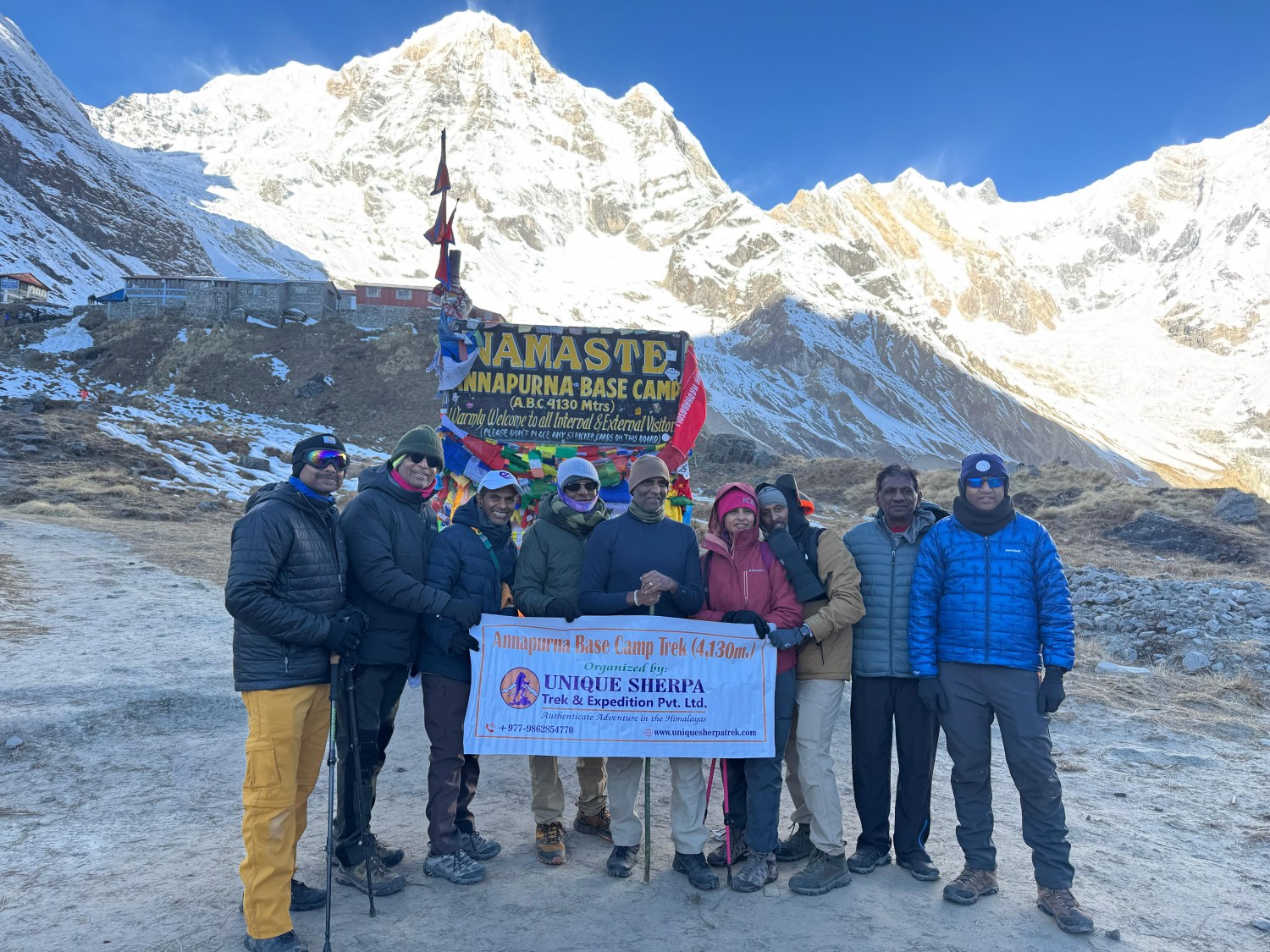
Table of Contents
Accommodation & Meals on the Annapurna Base Camp Trek
The Annapurna Base Camp (ABC) Trek is one of the most rewarding and accessible high-altitude adventures in Nepal, winding through terraced villages, rhododendron forests, and glacial moraine before arriving at the foot of the Annapurna massif. Along the way, trekkers pass through a striking range of ecosystems and cultures — from the subtropical lowlands around Nayapul, through Gurung and Magar villages, into the high alpine terrain surrounding the sanctuary itself. It's this variety, combined with a relatively short overall duration (most itineraries run 7–12 days), that makes ABC one of the most popular treks in Nepal for both first-timers and experienced trekkers alike.
But beyond the scenery, first-time trekkers almost always have the same two practical questions: where will I sleep, and what will I eat? Unlike multi-day treks in some other parts of the world, ABC doesn't require camping gear or self-sufficiency — the trail is dotted with teahouses (locally run guesthouses) roughly every hour or two of walking, meaning accommodation and food are available throughout without needing to carry a tent or cooking equipment. That said, standards, prices, and menu options shift noticeably as you gain elevation, and knowing what to expect at each stage makes a real difference in how you plan and pack.
This guide breaks down everything you need to know about accommodation and meals on the ABC trek in 2026/2027:
- Teahouse standards — what rooms actually look like at low, mid, and high altitude, and where you'll find attached bathrooms versus shared facilities
- Realistic nightly costs — room rates, the "free room if you eat dinner there" convention, and how prices climb the higher you go
- What's on the menu at every altitude — from fresh vegetables and momos in the lower villages to the more limited, carb-heavy menus near base camp
- How food and lodging change as you climb — from the lowland villages around 1,000m to the high alpine terrain at 4,130m, including why menu choices matter for acclimatization
If you'd rather have all of this arranged for you — accommodation booked, meals planned around altitude, permits sorted, and a licensed guide managing the details — you can see the full itinerary and book a guided package on the Annapurna Base Camp Trek page.
Accommodation on the Annapurna Base Camp Trek
There is no camping required on this route. The entire trail, from the Nayapul trailhead to Annapurna Base Camp itself, is lined with teahouses — small, family-run lodges that have served trekkers for decades. This is one of the reasons ABC is such a popular introduction to Himalayan trekking: you get genuine mountain hospitality without needing to carry a tent, stove, or sleeping mats.
What a teahouse actually looks like
Teahouses are simple, twin-share guesthouses built from stone, timber, and corrugated metal, usually centered around a communal dining hall with a wood-burning or gas stove. Expect:
- A basic twin room with two single beds, a thin mattress, pillow, and blanket
- Shared bathrooms at most lodges (private attached bathrooms become more common at lower elevations)
- Solar-heated hot showers at lower stops, usually for a small extra charge
- Electricity for charging devices, often at an hourly or flat fee the higher you go
- A shared dining hall that becomes the social heart of the evening, where trekkers from around the world gather around the stove
Rooms get noticeably simpler as you gain altitude. Below Chhomrong, some lodges offer attached bathrooms, thicker mattresses, and even Wi-Fi. Above Chhomrong and especially near Machhapuchhre Base Camp (MBC) and Annapurna Base Camp itself, facilities are far more basic — shared bathrooms, bucket showers (or none at all), and limited electricity.
Accommodation costs by altitude
Room rates on the ABC trek are famously low, largely because teahouse owners expect guests to eat their meals at the lodge rather than pay a high room rate. It's a system built on mutual trust, and it's considered poor etiquette to sleep at one teahouse and eat elsewhere.
| Village / Altitude | Typical Room Rate (per night) |
|---|---|
| Ghandruk, Chhomrong, Bamboo (lower villages) | $4 – $10 |
| Sinuwa to Deurali (mid-route) | $6 – $12 |
| Machhapuchhre Base Camp (3,700m) | $8 – $15 |
| Annapurna Base Camp (4,130m) | $10 – $15 |
| Upgraded / luxury lodges (select stops) | $20 – $50 |
During peak trekking seasons — October to November and March to April — demand is high and popular teahouses can fill by early-to-mid afternoon. Room rates can rise by 30–50% at the busiest stops during these windows, and late arrivals sometimes end up sleeping in the dining hall. Booking through a guide or agency generally guarantees your room is held, which matters most in peak season.
Tips for securing a good room
- Start walking early and aim to reach your overnight stop by early afternoon during peak season
- Trekking with a guide helps, since guides often have relationships with specific lodge owners
- Always eat your meals where you're sleeping — it's the local custom and keeps room rates low for everyone
- Carry a sleeping bag liner or a lightweight sleeping bag for extra warmth, especially above Deurali
Meals & Food on the Annapurna Base Camp Trek
Food on the ABC trek is simple, hearty, and designed to keep trekkers fueled at altitude. Teahouse kitchens serve a surprisingly wide mix of Nepali, Tibetan, and Western dishes, though the menu narrows the higher you climb — everything above the roadhead has to be carried in on foot or by mule, which affects both variety and price.
A typical day of eating on the trail
Breakfast usually includes porridge, Tibetan bread, pancakes, chapati, muesli, eggs, and fried potatoes, along with milk tea or coffee.
Lunch and dinner menus are built around dal bhat, noodles, fried rice, momos, vegetable thukpa, pasta, and — at lower elevations — even pizza and apple pie. Chhomrong in particular is well known among trekkers for its bakeries.
Dal bhat — steamed rice, lentil soup, vegetable curry, and pickles — is the trek's signature meal. It's calorie-dense, well-suited to altitude, and almost always comes with free refills, making it the most cost-effective option on the menu.
How the menu changes with altitude
| Stage | Typical Food Available |
|---|---|
| Ghandruk / Chhomrong (1,900m–2,170m) | Full menu: dal bhat, momos, pizza, pasta, eggs, fresh vegetables, bakery items |
| Sinuwa to Deurali (2,300m–3,200m) | Simpler menu: dal bhat, soups, potato dishes, Tibetan bread |
| Machhapuchhre Base Camp (3,700m) | Limited menu: porridge, thukpa, basic noodle and rice dishes |
| Annapurna Base Camp (4,130m) | Basic meals only: dal bhat, noodles, soup, rice dishes |
A useful rule of thumb: meat is not recommended above Sinuwa or Chhomrong, since there's no reliable refrigeration at higher elevations. The Annapurna Sanctuary is also treated as a religiously protected zone by many lodges, so vegetarian dal bhat, momos, and noodle soup are the standard — and the safest — choices the higher you go.
What meals cost
| Item | Lower Villages | Higher Altitude (MBC/ABC) |
|---|---|---|
| Dal bhat | $3 – $5 | $8 – $14 |
| Breakfast dish (eggs, porridge, pancakes) | $2 – $4 | $5 – $8 |
| Noodles / fried rice/momos | $3 – $6 | $6 – $10 |
| Hot tea/coffee | $1 – $2 | $2 – $4 |
| Bottled or boiled water | $1 – $2 | $2 – $4 |
Most independent trekkers budget $20–$35 per day for food and hot drinks combined. Sticking mainly to dal bhat for lunch and dinner is the most economical approach and, conveniently, also the most nutritionally sound option at altitude. If you're on a guided package, main meals are usually already included in the trip cost.
Water and drinks on the trail
Tap, river, and stream water should never be drunk untreated. Every teahouse sells boiled or filtered water, and above Chhomrong many lodges have stopped selling plastic bottles altogether to cut down on trail waste — carrying a reusable bottle with purification tablets or a filter is the standard approach. Hot drinks like ginger tea, lemon tea, and coffee are available throughout, though prices climb with altitude just like everything else.
Eating well at altitude
A few practical habits make a real difference once you're above 3,000 meters:
- Prioritize carbohydrates — rice, noodles, potatoes, and bread are digested more efficiently than fats or proteins in low-oxygen conditions
- Eat small amounts often, even if your appetite drops, since appetite loss can be an early sign of altitude sickness
- Avoid raw, unwashed salads at higher elevations
- Pack a small stash of energy bars, trail mix, or electrolyte tablets as a backup — teahouse snacks are available everywhere but cost noticeably more than in Kathmandu or Pokhara
Budgeting for Accommodation & Meals Together
Combining lodging and food, most independent trekkers should plan for roughly $25–$45 per day on the trail, with costs trending toward the higher end near Machhapuchhre Base Camp and Annapurna Base Camp. Trekkers on all-inclusive guided packages typically have accommodation and main meals already built into the trip price, which removes the daily cash-budgeting guesswork — a detail worth considering if it's your first time trekking in Nepal.
Planning Your Trip
Coordinating a trek to Annapurna Base Camp involves more moving parts than most people expect: securing teahouse beds during peak season, sequencing your itinerary to allow proper acclimatization, arranging the required permits (TIMS card and ACAP), and figuring out meal logistics at altitude where menu options and prices shift dramatically as you climb.
If you'd rather not manage all of that yourself, a guided package takes it off your plate. A full-service trip typically includes:
- Teahouse accommodation booked in advance along the route, so you're not left scrambling for a bed during busy months (October–November and March–April especially)
- Meal planning that accounts for altitude — lighter, easily digestible food as you climb, with your guide often steering you away from choices that can worsen altitude symptoms
- Permits handled for you — the TIMS card and Annapurna Conservation Area Permit (ACAP), both required to trek in the region
- A licensed guide who manages pacing, monitors for signs of altitude sickness, and can adjust the itinerary in response to weather or trail conditions
- Porter support (often available or included), so you're not carrying your full pack over multiple high-altitude days
This kind of package suits people who want the trek without the logistical overhead — first-time trekkers, solo travelers who'd prefer not to navigate teahouse availability alone, or anyone short on time to research the route in detail.
You can view the full itinerary, day-by-day breakdown, inclusions, and available 2026/2027 departure dates on the Annapurna Base Camp Trek trip page.
Accommodation & Meals FAQ
1. Do I need to book teahouses in advance for the ABC trek?
During peak seasons (March–May and September–November), it's strongly recommended, especially for popular stops like Chhomrong, Himalaya, Deurali, and Machhapuchhre Base Camp (MBC), where rooms fill quickly. In the off-season (monsoon or winter), you can usually find a bed by simply arriving early in the afternoon. Guided packages typically handle these bookings in advance.
2. How much does a teahouse room cost on the ABC trek?
Rooms range from free to around NPR 500–1,000 (roughly $4–8 USD) per night in most lowland and mid-altitude villages, rising to $8–15 near base camp. Many teahouses offer free rooms on the condition that you eat dinner and breakfast there — this is the standard, unwritten arrangement along the route.
3. Are the rooms private, and do they have attached bathrooms?
Most teahouses offer basic twin-share rooms with a shared bathroom down the hall. Attached bathrooms are available in some lower-altitude villages (like Ghandruk or Jhinu Danda) but become rare above Chhomrong. Hot showers are usually available for an extra fee (gas- or solar-heated).
4. What food is available on the ABC trek?
Menus are surprisingly varied at lower altitudes — dal bhat, momos, noodle soups, pizza, pancakes, and even burgers are common. As you climb above Deurali, menus narrow to simpler, carb-heavy options like dal bhat, noodles, and porridge, since fresh ingredients become harder to transport.
5. Is dal bhat really the best option at altitude?
Yes. Dal bhat (lentils, rice, vegetables) is freshly cooked, comes with free refills at most teahouses, and provides the carbohydrates and calories your body needs for high-altitude trekking. Many guides recommend it specifically because it's easier to digest than heavier, oilier dishes.
6. How much should I budget per day for food and lodging?
A realistic daily budget is $25–35 USD for meals and accommodation, factoring in higher prices as you gain elevation. Add a few dollars per day for hot showers, boiled water, or charging devices, which are usually charged separately.
7. Can I drink tap water on the trek?
Not directly. Most trekkers either treat water with purification tablets/drops or buy boiled water from teahouses (usually cheaper and more eco-friendly than bottled water, which creates plastic waste at altitude). Boiled water typically costs $1–3 depending on elevation.
8. Does food and altitude sickness have any connection?
Yes — heavy, greasy, or unfamiliar foods can worsen nausea and digestive discomfort at altitude, which can be mistaken for or compound symptoms of AMS (acute mountain sickness). Sticking to simple, warm, carbohydrate-rich meals like dal bhat or soup is generally easier on the body above 3,000m.
9. What's the difference between a guided trek and independent trekking for accommodation/meals?
On an independent trek, you choose and pay for teahouses and meals as you go, which gives flexibility but no guarantee of availability during busy periods. A guided package pre-arranges rooms and often includes meals in the cost, removing the uncertainty — useful for first-timers or anyone trekking during peak season.
10. Is Wi-Fi or electricity available at teahouses?
Most teahouses offer Wi-Fi and charging for a small fee ($2–5), though speed and reliability drop the higher you climb. Above MBC, connectivity becomes unreliable or unavailable, so it's worth telling family/friends in advance not to expect regular updates near base camp.
.jpg)