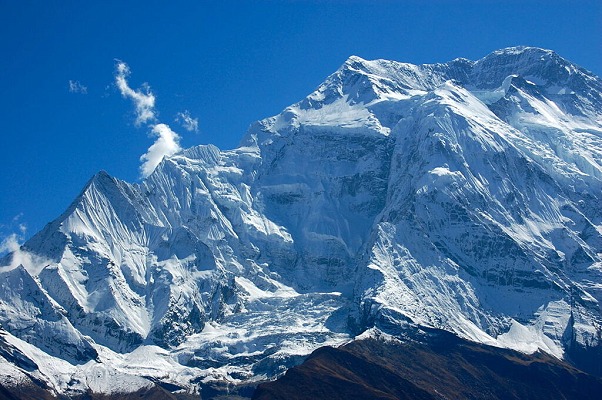



Manaslu Tsum Valley Trek: 17-Day Itinerary, Cost & Permits
Table of Contents
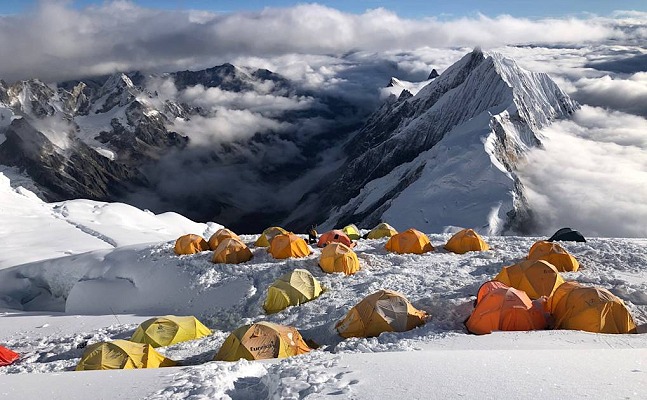
The Manaslu Tsum Valley Trek is the closest thing Nepal still has to a genuinely hidden Himalaya. You walk up the Budhi Gandaki gorge, turn off at Lokpa into a sacred valley that was closed to outsiders until 2008, sleep under 8,163 m Mount Manaslu at Samagaun, and finish by crossing the 5,106 m Larkya La pass. In 17 days you get two treks in one — a Tibetan Buddhist pilgrimage valley and a full high-pass circuit — without the crowds of Everest or Annapurna.
This guide covers the complete 17-day itinerary, every permit you need with 2026 fees, a realistic cost breakdown, the best seasons, difficulty, packing and the questions we get asked most often.
Book or customise this trek here: Manaslu Tsum Valley Trek — Unique Sherpa Trek
Quick Facts: Manaslu Tsum Valley Trek at a Glance
| Detail | Information |
|---|---|
| Trek duration | 17 days (Kathmandu to Kathmandu) |
| Maximum altitude | Larkya La Pass — 5,106 m / 16,752 ft |
| Trek start point | Machha Khola (930 m), Gorkha district |
| Trek end point | Dharapani / Besisahar, Lamjung district |
| Difficulty | Moderate to strenuous |
| Daily walking | 5–7 hours average; 8–9 hours on pass day |
| Total distance | Approx. 210–230 km |
| Accommodation | Teahouses / mountain lodges |
| Best seasons | March–May (spring), September–November (autumn) |
| Permits required | Manaslu RAP, Tsum Valley RAP, MCAP, ACAP |
| Guide | Mandatory — restricted area regulation |
| Typical package cost | USD 1,450 – USD 2,100 per person |
| Group size | 1 trekker and up (solo permits allowed since March 2026) |
Why Trek Manaslu and Tsum Valley Together?
Most trekkers do the Manaslu Circuit alone and skip Tsum entirely. That is a mistake if you have the days. Here is what the combination gives you:
- A living Buddhist culture, not a museum one. Tsum Valley — Tsumba means "vivid" in the local dialect — is home to the Tsumba people, of Tibetan origin, who still follow the non-violence vow (shyagya) forbidding hunting and animal slaughter in the valley.
- Monasteries you have to walk to. Mu Gompa (3,700 m), Rachen Gompa nunnery, Dhephyudonma Gompa and the Milarepa Piren Phu meditation cave are not reachable by road or helicopter tourism.
- Two distinct landscapes. Tsum is a wide, high, Tibetan-style valley. The Manaslu Circuit is a deep gorge that opens into glacier country.
- Proper acclimatisation. The Tsum detour gets you to 3,700 m and back down before you push to Samagaun and Larkya La. Trekkers who add Tsum almost always cross the pass more comfortably.
- Manaslu Base Camp side trip. From Samagaun you can climb to 4,800 m for a face-to-face view of the world's eighth-highest mountain.
- Far fewer people. Manaslu issues a fraction of the permits Annapurna does, and only a minority of those trekkers turn into Tsum.
Route note: The Tsum Valley branches northeast off the main Manaslu trail at Lokpa. You walk in, you walk out the same way, and then continue up the Budhi Gandaki. There is no through-route from Tsum over to Nubri for trekkers.
17-Day Manaslu Tsum Valley Trek Itinerary
This is the itinerary we run at Unique Sherpa Trek. It is paced for acclimatisation, not for speed.
Itinerary Summary Table
| Day | Route | Altitude | Walking / Driving Time |
|---|---|---|---|
| 1 | Kathmandu → Machha Khola (drive) | 930 m | 8–9 hrs drive |
| 2 | Machha Khola → Jagat | 1,340 m | 6–7 hrs |
| 3 | Jagat → Lokpa | 2,240 m | 5–6 hrs |
| 4 | Lokpa → Chumling | 2,386 m | 4–5 hrs |
| 5 | Chumling → Chhokangparo | 3,031 m | 5–6 hrs |
| 6 | Chhokangparo → Nile / Chhule | 3,361 m | 5 hrs |
| 7 | Nile → Mu Gompa + exploration | 3,700 m | 3–4 hrs |
| 8 | Mu Gompa → Chhokangparo via Rachen Gompa | 3,031 m | 6–7 hrs |
| 9 | Chhokangparo → Lokpa | 2,240 m | 6 hrs |
| 10 | Lokpa → Deng → Ghap | 2,380 m | 6–7 hrs |
| 11 | Ghap → Namrung → Lho | 3,180 m | 6–7 hrs |
| 12 | Lho → Shyala → Samagaun | 3,530 m | 4–5 hrs |
| 13 | Samagaun — acclimatisation day | 3,530 m | 5–6 hrs side trip |
| 14 | Samagaun → Samdo | 3,875 m | 3–4 hrs |
| 15 | Samdo → Dharamsala (Larkya Phedi) | 4,460 m | 3–4 hrs |
| 16 | Dharamsala → Larkya La → Bimthang | 5,106 m → 3,720 m | 8–9 hrs |
| 17 | Bimthang → Dharapani → drive to Kathmandu | 1,860 m → 1,400 m | 5 hrs trek + 8 hrs drive |
Day-by-Day Detail Itinerary
Day 1 — Kathmandu to Machha Khola (930 m), 8–9 hours by jeep
An early start west along the Prithvi Highway, then north through Arughat and Soti Khola. The last two hours are rough, unpaved and spectacular. Overnight in a riverside teahouse.
Day 2 — Machha Khola to Jagat (1,340 m), 6–7 hours
The trail crosses suspension bridges, passes the hot springs at Tatopani, and climbs through Dobhan and Yaru Khola. Jagat is a stone-paved village and the first permit checkpoint — keep your documents handy.
Day 3 — Jagat to Lokpa (2,240 m), 5–6 hours
Through Salleri and Sirdibas to Philim, a large Gurung village, then a steep forested climb to Lokpa. This is where the Tsum Valley trail splits from the Manaslu Circuit.
Day 4 — Lokpa to Chumling (2,386 m), 4–5 hours
A short but demanding day of steep ups and downs above the Shiar Khola. First views of Ganesh Himal. Chumling has a small gompa and traditional stone houses.
Day 5 — Chumling to Chhokangparo (3,031 m), 5–6 hours
The valley opens dramatically. Cross to the north bank, pass Rainjam and Serpu Khola. Chhokangparo is twin villages — Chhokang and Paro — with Ganesh Himal and Himalchuli on the skyline.
Day 6 — Chhokangparo to Nile / Chhule (3,361 m), 5 hours
Visit Piren Phu, the sacred cave where the Tibetan yogi Milarepa is said to have meditated, with old murals and rock carvings. Continue through Lamagaun, Phurbe and Chhule to Nile, the last settlement in Upper Tsum.
Day 7 — Nile to Mu Gompa (3,700 m) and exploration, 3–4 hours
A short climb to the highest and largest monastery in the valley, close to the Tibetan border. Optional afternoon hike to Dhephyudonma Gompa, one of the oldest in the region. Overnight at the monastery guesthouse.
Day 8 — Mu Gompa to Chhokangparo via Rachen Gompa (3,031 m), 6–7 hours
Descend the valley's western side to Rachen Gompa, a large nunnery of the Ngak-pa tradition housing dozens of nuns. Continue to Chhokangparo.
Day 9 — Chhokangparo to Lokpa (2,240 m), 6 hours
Retrace the route down through Chumling and back to the Tsum junction at Lokpa.
Day 10 — Lokpa to Deng and on to Ghap (2,380 m), 6–7 hours
Back on the Manaslu Circuit. Through bamboo and rhododendron forest to Deng, then Bihi Phedi and Ghap, where mani walls carved with Buddhist mantras line the trail.
Day 11 — Ghap to Lho (3,180 m) via Namrung, 6–7 hours
A long climbing day into the Nubri valley. Namrung (2,630 m) is the second checkpoint. Past Lihi and Sho, the mountains open up — first clear views of Manaslu North and Naike Peak. Lho's Ribung Gompa at sunset is one of the highlights of the trek.
Day 12 — Lho to Samagaun (3,530 m) via Shyala, 4–5 hours
Short and scenic. Shyala sits in a natural amphitheatre with Himalchuli, Peak 29, Manaslu and Ganesh Himal around it. Samagaun is the largest village on the route.
Day 13 — Samagaun: acclimatisation day
Essential, not optional. Two choices:
- Manaslu Base Camp (4,800 m) — a steep 5–6 hour round trip, the best acclimatisation and the best views.
- Birendra Lake (3,691 m) and Pungyen Gompa (4,000 m) — gentler, glacier-fed turquoise lake and a monastery with a view of the Manaslu glacier.
Day 14 — Samagaun to Samdo (3,875 m), 3–4 hours
An easy day past mani walls and the Larkya Bazaar ruins. Samdo is a Tibetan refugee village settled in the 1960s, just below the Gya La trading pass to Tibet.
Day 15 — Samdo to Dharamsala / Larkya Phedi (4,460 m), 3–4 hours
Short, slow and deliberate. Dharamsala is a basic stone shelter, not a village — expect cold nights, limited beds and a simple menu.
Day 16 — Dharamsala to Bimthang (3,720 m) via Larkya La (5,106 m), 8–9 hours
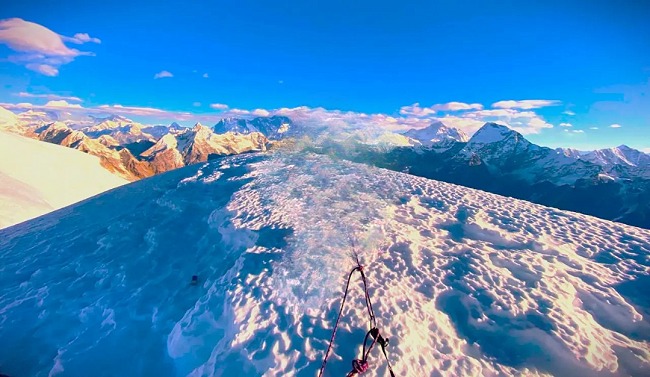
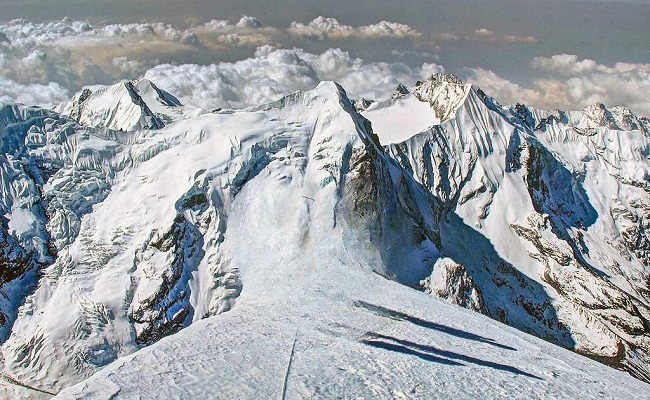
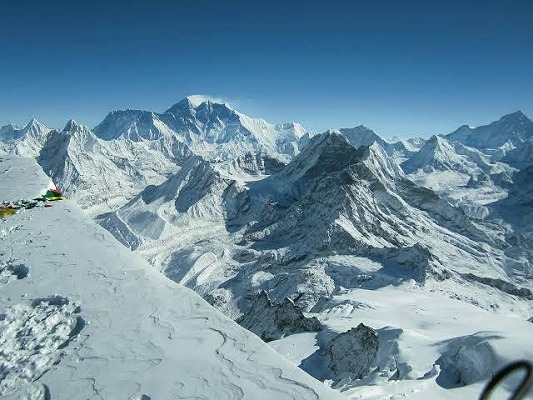
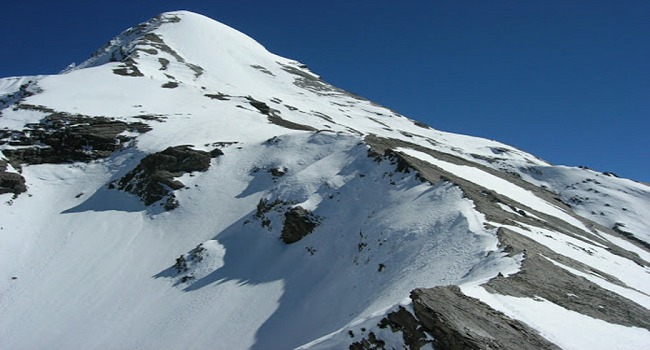
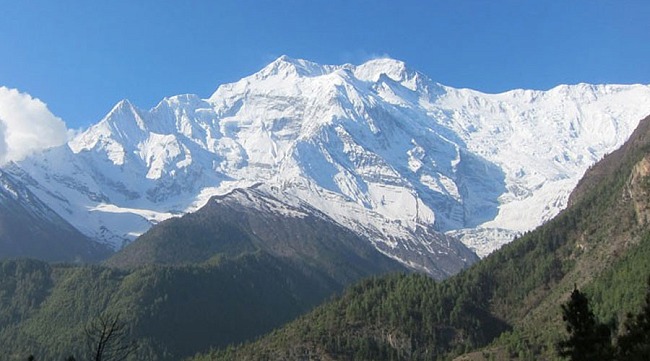
The big one. Leave around 4:00 am to cross the pass before the afternoon wind. The summit gives a panorama of Himlung Himal, Cheo Himal, Gyaji Kang, Kang Guru and Annapurna II. The descent to Bimthang is long, steep and knee-punishing, but Bimthang's meadow below the glacier is a spectacular place to sleep.
Day 17 — Bimthang to Dharapani, then drive to Kathmandu
Descend through rhododendron forest to Gho, Tilije and Dharapani (1,860 m), roughly 5 hours. Jeep to Besisahar, then vehicle to Kathmandu. It is a long day — many trekkers prefer to break it with a night in Besisahar and arrive in Kathmandu the following morning.
Want this run at a slower pace, with an extra night in Samagaun or a helicopter return from Samagaun? We customise it — send us your dates.
Manaslu Tsum Valley Trek Permits (2026)
Manaslu and Tsum Valley are restricted areas. Permits are issued through a government-registered trekking agency — you cannot apply for the restricted area permits yourself, and you cannot buy them at the trailhead.
The Four Permits You Need
| # | Permit | Issued by | Where it applies |
|---|---|---|---|
| 1 | Manaslu Restricted Area Permit (MRAP) | Department of Immigration | Jagat → Dharapani |
| 2 | Tsum Valley Restricted Area Permit (TVRAP) | Department of Immigration | Lokpa → Mu Gompa |
| 3 | Manaslu Conservation Area Permit (MCAP) | NTNC / Nepal Tourism Board | Philim → Larkya La |
| 4 | Annapurna Conservation Area Permit (ACAP) | NTNC / Nepal Tourism Board | Larkya La → Dharapani exit |
A small Chum–Nubri Rural Municipality development fee (approx. NPR 1,000–2,000) is also collected locally at Jagat.
2026 Permit Fees
| Permit | Sep–Nov (peak) | Dec–Aug (off-peak) |
|---|---|---|
| Manaslu RAP | USD 100 for first 7 days, then USD 15/day | USD 75 for first 7 days, then USD 10/day |
| Tsum Valley RAP | USD 40 for first 7 days, then USD 7/day | USD 30 for first 7 days, then USD 7/day |
| MCAP | NPR 3,000 (approx. USD 22–30) | NPR 3,000 |
| ACAP | NPR 3,000 (approx. USD 22–30) | NPR 3,000 |
| Municipality fee | NPR 1,000–2,000 | NPR 1,000–2,000 |
| Estimated total | USD 210 – 260 | USD 160 – 200 |
Important notes:
- Fees are per person, non-refundable and non-transferable.
- SAARC nationals pay a reduced conservation area rate (NPR 1,000 for MCAP/ACAP).
- TIMS is not required on this route — the restricted area permit replaces it.
- Restricted area permits are date-specific. If you finish early or late, the dates on the permit are what checkpoints read.
- Permit rules and fees are revised periodically. Always confirm current rates with your agency before you pay.
The 2026 Solo Trekker Rule Change
Until March 2026, restricted area permits required a minimum of two trekkers on one application. On 22 March 2026, Nepal's Department of Immigration removed that requirement across the restricted districts, including Manaslu and Tsum Valley. A single trekker can now be issued a permit at the standard per-person fee.
What did not change: you still need a licensed guide and you still have to apply through a registered trekking agency. "Solo" means you and your guide — not walking the trail alone. Checkpoints at Jagat, Philim, Samdo and Dharapani verify both permit and guide.
Documents Required for Your Permit
- Original passport, valid at least six months beyond your travel dates
- Nepal visa (already issued — permits cannot be processed before you arrive)
- Two to four passport-sized photographs
- Travel insurance policy covering trekking to 5,500 m including helicopter evacuation
- Your confirmed trek start and end dates
Allow 1–2 working days in Kathmandu for processing. The Department of Immigration is closed on Saturdays and public holidays — build this into your plan.
Manaslu Tsum Valley Trek Cost Breakdown
Package Cost
A guided 17-day package from a Kathmandu-based operator typically runs USD 1,450 to USD 2,100 per person, varying with group size, accommodation standard and whether domestic transport is by shared jeep or private vehicle.
| Group size | Typical price per person |
|---|---|
| 1 person (solo) | USD 1,950 – 2,100 |
| 2–4 people | USD 1,650 – 1,850 |
| 5–8 people | USD 1,500 – 1,650 |
| 9+ people | USD 1,450 – 1,550 |
Get an exact quote for your dates and group size at uniquesherpatrek.com.
What a Package Normally Includes
- All four trekking permits and municipality fees
- Licensed, English-speaking, government-registered trekking guide
- Porter (usually one per two trekkers)
- Guide and porter wages, insurance, food, accommodation and equipment
- Kathmandu ↔ trailhead ground transport
- Teahouse accommodation on trek (twin sharing)
- Three meals a day on trek
- First aid kit, oximeter, duffel bag, trekking map
- Government taxes and official paperwork
What Is Usually Excluded
- International flights and Nepal visa
- Kathmandu hotel, meals and sightseeing
- Travel and high-altitude rescue insurance (mandatory)
- Hot showers, Wi-Fi, device charging, bottled or boiled water
- Alcohol, soft drinks, snacks and personal expenses
- Tips for guide and porters
- Emergency evacuation costs
- Anything not listed as included
Independent Budget Estimate
If you arrange the trek yourself through an agency (permits + guide only) and pay for food and lodging as you go:
| Item | Cost (USD) |
|---|---|
| Permits (peak season) | 210 – 260 |
| Guide (17 days @ USD 30–35/day) | 510 – 595 |
| Porter (17 days @ USD 22–28/day) | 375 – 475 |
| Teahouse + meals (USD 30–40/day) | 510 – 680 |
| Transport (Kathmandu–Machha Khola–Kathmandu) | 60 – 150 |
| Agency service charge | 100 – 200 |
| Total | 1,765 – 2,360 |
A pre-arranged package is usually cheaper than doing this piece by piece, because operators buy transport and teahouse services at local rates.
Daily On-Trail Costs to Budget For
| Item | Typical price |
|---|---|
| Hot shower | NPR 300–600 |
| Device charging | NPR 200–500 per hour |
| Wi-Fi | NPR 400–800 |
| Boiled water (1 L) | NPR 150–300 |
| Bottle of beer | NPR 600–900 |
| Snickers / energy bar | NPR 250–400 |
Carry cash. There is no ATM after Arughat, and lodges do not accept cards. Budget roughly NPR 3,000–5,000 per trekking day for extras and tips.
Tipping guidance: 10–15% of your package total is customary, typically split with the guide receiving roughly double a porter's share.
Best Time for the Manaslu Tsum Valley Trek
| Season | Months | Conditions | Verdict |
|---|---|---|---|
| Spring | Mar–May | 10–20 °C low, -5 to 5 °C high camps. Rhododendron in bloom, stable weather. | Excellent |
| Autumn | Sep–Nov | Clearest skies, crisp air, biggest mountain views. Busiest and most expensive. | Best overall |
| Winter | Dec–Feb | Larkya La often snow-blocked; Dharamsala and some upper lodges close. | Tsum only; circuit risky |
| Monsoon | Jun–Aug | Heavy rain, leeches, landslides on the Budhi Gandaki road, poor visibility. | Avoid |
Best single months: October, then late April and early May.
Cultural timing: Tsum Valley's Saga Dawa festival (May/June) and Lhosar (February) are extraordinary if your dates allow — but check with your operator, as dates follow the Tibetan lunar calendar.
How Difficult Is the Manaslu Tsum Valley Trek?
Moderate to strenuous. Not technical — no ropes, no crampons in normal conditions — but demanding because of four factors:
- Length. 17 consecutive days of walking, most of them 5–7 hours.
- Altitude. Larkya La at 5,106 m, with three nights above 3,800 m before it.
- Terrain. Steep gorge sections, long descents, loose moraine on the pass approach.
- Remoteness. Basic lodges, limited medical facilities, evacuation by helicopter only.
Fitness Preparation (start 8–12 weeks out)
- Cardio: 4–5 sessions a week — hiking, running, cycling, stair climbing
- Hill training: weekly long hike of 5–7 hours with a 6–8 kg pack
- Strength: squats, lunges, step-ups, calf raises, core work twice a week
- Descent practice: downhill is what wrecks knees on day 16 — train for it
- Trial run: if possible, complete a multi-day trek before you commit
Altitude Safety Rules
- Gain no more than 400–500 m of sleeping altitude per day above 3,000 m
- Drink 3–4 litres of water daily
- No alcohol above 3,000 m
- Tell your guide about headache, nausea, dizziness or breathlessness immediately
- Descend at the first sign of AMS symptoms that do not improve
- Carry Diamox only after discussing it with your doctor
- Ensure your insurance explicitly covers helicopter evacuation above 5,000 m
Accommodation and Food on the Trail
Teahouses the whole way. In the lower Budhi Gandaki and in Samagaun they are comfortable — twin rooms, thick blankets, a heated dining room. In Upper Tsum, at Mu Gompa and at Dharamsala they are basic: plywood partitions, shared squat toilets, no heating in rooms.
- Bring a -10 °C to -15 °C sleeping bag. Blankets alone are not enough at Samdo and Dharamsala.
- Single rooms are rarely available in Upper Tsum and never at Dharamsala.
- Charging and Wi-Fi are solar-powered and unreliable above Namrung.
Food is standard teahouse fare, and prices climb with altitude:
- Dal bhat — rice, lentils, vegetable curry, pickle. Unlimited refills, the best value and the best fuel.
- Thukpa, fried rice, fried noodles, momos, pasta, potatoes in every form
- Porridge, Tibetan bread, chapati, eggs and pancakes for breakfast
- Yak cheese in Samagaun and Samdo
- Ginger-lemon-honey tea — drink a lot of it
Note on Tsum Valley: the shyagya vow means meat is not slaughtered in the valley. Any meat available has been carried in, often for days without refrigeration. Eat vegetarian in Tsum — it is safer and it respects local practice.
Essential Packing List
Clothing
- Base layers: 2–3 merino or synthetic tops, 2 bottoms
- Insulation: fleece or light down mid-layer
- Down jacket rated to -15 °C
- Waterproof, breathable jacket and trousers
- Trekking trousers ×2, trekking shirts ×3
- Warm hat, sun hat, buff, liner gloves, insulated gloves
- 4–5 pairs trekking socks, 1 pair thermal sleeping socks
Footwear
- Broken-in waterproof trekking boots with ankle support
- Camp shoes or sandals
- Gaiters and microspikes (autumn/spring pass crossings)
Gear
- 45–55 L backpack, 30 L daypack
- -10 °C to -15 °C sleeping bag + liner
- Trekking poles (essential for the Bimthang descent)
- Headlamp with spare batteries
- Water bottles/bladder 3 L + purification tablets or filter
- 20,000 mAh power bank and solar charger
- Category 4 sunglasses, SPF 50 sunscreen, SPF lip balm
Documents & Health
- Passport, visa, 4 passport photos, insurance policy copy
- Copies of all permits (your guide holds originals)
- Personal first aid: blister care, painkillers, rehydration salts, antiseptic, personal medication
- Cash in Nepali rupees for the whole trek
Culture and Etiquette in Tsum Valley
Tsum is a beyul — a sacred hidden valley in Tibetan Buddhist tradition. A few things matter here:
- Walk clockwise around mani walls, chortens and prayer wheels
- Ask before photographing people, monks, nuns or monastery interiors
- Remove shoes and hats inside gompas; do not point your feet at altars
- Do not hunt, fish or bring meat into the valley
- Dress modestly — covered shoulders and knees, especially at monasteries
- Offerings at monasteries (NPR 200–500) are appreciated and go to upkeep
- Learn Tashi delek (greetings) and Thuje che (thank you) — they open doors
Frequently Asked Questions
1. Can I trek Manaslu and Tsum Valley without a guide?
No. A licensed guide is mandatory in restricted areas and is verified at checkpoints. The March 2026 rule change allows a solo permit, not unguided trekking.
2. How much does the Manaslu Tsum Valley Trek cost in total?
Budget USD 1,450–2,100 for a guided 17-day package, plus international flights, Kathmandu hotels, insurance, gear, tips and roughly USD 10–20 a day for personal extras.
3. Is 17 days enough for both Manaslu and Tsum Valley?
Yes, provided the itinerary keeps the Samagaun acclimatisation day and does not compress the Tsum section. Some trekkers add 2–3 days for Manaslu Base Camp, an extra night at Mu Gompa, or a gentler final day.
4. How hard is Larkya La Pass?
It is the hardest day: a 4:00 am start, roughly 650 m of ascent on snow and moraine, then a 1,400 m descent to Bimthang. Technically straightforward, physically long. Crampons or microspikes are occasionally needed in early spring and late autumn.
5. Do I need previous high-altitude experience?
Not strictly, but it helps. Good cardiovascular fitness and previous multi-day trekking matter more than altitude experience.
6. Is there mobile signal and internet?
NTC and Ncell work intermittently up to Namrung and again at Samagaun. Upper Tsum and Dharamsala have little to none. Paid Wi-Fi exists in larger villages but is slow.
7. What happens in a medical emergency?
Your guide carries a first aid kit and oximeter. Evacuation is by helicopter and is expensive — confirm your insurance covers trekking to 5,500 m with helicopter rescue before you leave home.
8. Can I do this trek in winter?
Tsum Valley, yes, with cold nights and some lodges closed. The full circuit over Larkya La, generally no — the pass can be blocked and Dharamsala frequently shuts down.
9. Is Manaslu Tsum Valley harder than Everest Base Camp?
It is longer, more remote and has a higher pass crossing, though EBC reaches a higher sleeping altitude. Manaslu Tsum Valley has fewer facilities and less rescue infrastructure, so it feels tougher.
10. When should I book?
For October and April departures, 2–4 months ahead. Teahouse space at Samdo and Dharamsala is limited in peak season, and permits need lead time. Check available dates here.
Ready to Walk the Hidden Valley?
The Manaslu Tsum Valley Trek gives you something the busier Himalayan routes no longer can: a trail where a monastery still holds a morning puja for its own monks rather than for an audience, and where the pass at the end feels earned rather than queued for.
We run this trek with local guides from the Manaslu and Tsum region, handle all four permits, and adjust the pace to your group.
👉 View full trip details, dates and prices — Manaslu Tsum Valley Trek
Permit fees, regulations and road conditions in Nepal change from season to season. The figures in this guide reflect 2026 rates at the time of writing — please confirm current costs with us before booking.