


How Far Is Annapurna Base Camp from Pokhara? Distance, Route & Time Explained

Table of Contents
If you've ever scrolled through photos of a glacial amphitheater ringed by 7,000- and 8,000-meter peaks, you've probably seen Annapurna Base Camp — one of the most accessible high-altitude viewpoints in the entire Himalaya. Unlike Everest Base Camp, there's no mountain flight involved to get started. The journey to ABC begins right in Pokhara, Nepal's lakeside gateway city to the Annapurna region.
That's exactly why so many travelers ask the same question before booking: how far is Annapurna Base Camp from Pokhara, really? It seems like a number that should be easy to pin down, but anyone who has searched it before knows the figures online rarely match — one site says 80 km, another says 95 km, and a third quotes something well over 115 km, all while describing what sounds like the same trek.
The honest answer is that "distance" here depends on a few moving parts. Road access into the Annapurna region has crept steadily closer to the mountains over the years, so the point where your vehicle stops and your feet take over isn't fixed — it shifts depending on whether your itinerary ends at Nayapul, Siwai, or Ghandruk. Then there's the route itself: the classic path via Ghorepani and Poon Hill adds a genuine detour for one of the best sunrise viewpoints in Nepal, while more direct routes through Jhinu Danda skip it entirely and shave off real distance. And finally, there's whether a figure is quoting the one-way trekking distance or the full round trip back to Pokhara — a detail that easily doubles the number if you're not paying attention.
As with most trekking distances in Nepal, the honest answer depends on which route you take, where the road ends, and whether you build in the Poon Hill sunrise detour along the way — which is why the numbers you find online can range anywhere from 80 km to over 115 km for what sounds like the same trek. None of these figures are wrong, exactly; they're just each telling a different part of the story, and taken alone, none of them fully prepares you for what the days on the trail will actually feel like.
Let's break it down properly — distance, route, and time — so you know exactly what to expect before you start walking.
Quick Answer
Annapurna Base Camp is roughly 80–95 km round trip from Pokhara on the classic route, depending on your starting trailhead and whether you include Poon Hill. In practice, this breaks down as:
- Pokhara to Nayapul (drive): about 40–45 km by road, roughly 1–1.5 hours
- Nayapul to Annapurna Base Camp (trek, one way): about 38–45 km, spread over 4–5 trekking days
- Return trek to Nayapul: about 2–3 days, since descending is faster
Most trekkers complete the full round trip — Pokhara to ABC and back — in 7 to 11 days, with the wider range coming down to whether the itinerary includes the Ghorepani–Poon Hill loop or takes a more direct route via Jhinu Danda or Ghandruk.
Breaking Down the Route Step by Step
Step 1: Pokhara to Nayapul (Drive)
The trek doesn't actually start in Pokhara itself — it starts at a trailhead a short drive away. Most itineraries begin with a private jeep or shared vehicle from Pokhara to Nayapul, a journey of about 40–45 km that takes roughly 1 to 1.5 hours along a paved road. Some itineraries push the drive further, to Siwai, Kimche, or Ghandruk, which shortens the walking distance but skips some of the lower valley scenery.
Step 2: Nayapul to Tikhedhunga and Ghorepani (If Including Poon Hill)
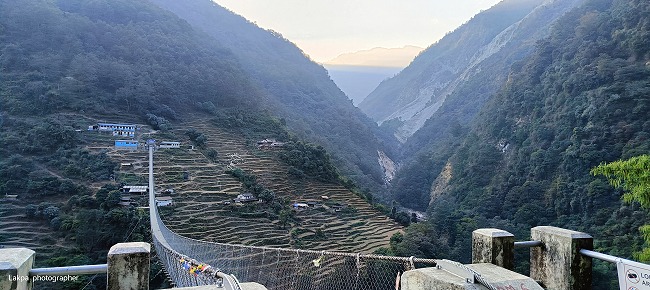
For trekkers taking the classic route via Poon Hill, the trail climbs from Nayapul through Birethanti and Tikhedhunga before a long, stone-stepped ascent to Ulleri and on to Ghorepani at 2,860 meters. This stretch covers roughly 15–16 km over one to two days and is the toughest climbing of the entire trek, thanks to the endless stairs above Ulleri.
Step 3: Poon Hill Sunrise and on to Tadapani
An early-morning side hike to Poon Hill (3,210 m) rewards trekkers with one of the most famous sunrise panoramas in Nepal, with Dhaulagiri, Annapurna South, and Machapuchare all visible in one sweep. From Ghorepani, the trail continues through rhododendron forest to Tadapani, adding around 10 km to the route.
Step 4: Tadapani to Chhomrong and Sinuwa
The trail descends into the Kimrong Khola valley before climbing back up to Chhomrong, the last large village before the Annapurna Sanctuary and the gateway to the inner sanctuary trail. From Chhomrong, the path drops steeply and climbs again to Sinuwa. This section covers roughly 15 km and typically takes a full day.
Step 5: Sinuwa to Deurali via Bamboo and Himalaya
Beyond Sinuwa, the trail enters increasingly narrow, forested terrain, passing through Bamboo, Dovan, and Himalaya before reaching Deurali, where the valley starts to open up toward the Sanctuary. This stretch is about 13–15 km and is usually split across one to two days, with the terrain becoming noticeably colder and steeper.
Step 6: Deurali to Annapurna Base Camp via Machhapuchhre Base Camp
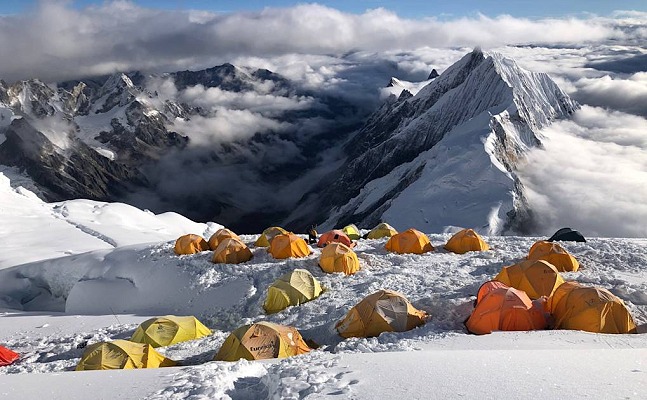
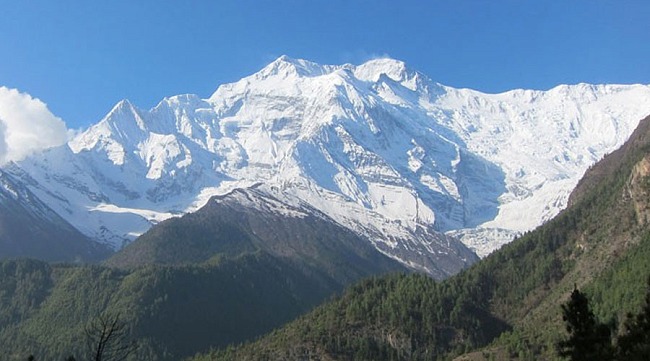
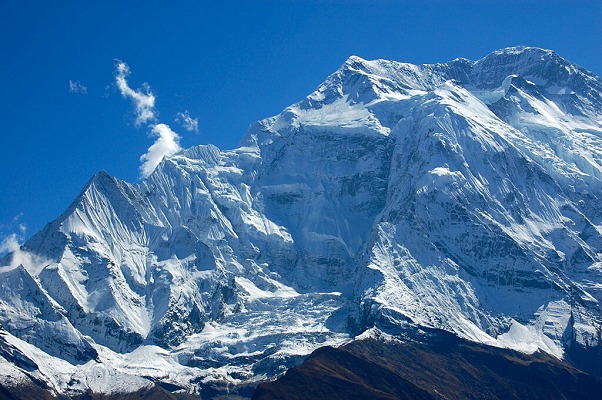
The final push climbs from Deurali to Machhapuchhre Base Camp (MBC) and then on to Annapurna Base Camp itself at 4,130 meters — a dramatic, glacier-carved bowl surrounded by Annapurna I, Annapurna South, Gangapurna, and Machhapuchhre. This last leg covers roughly 8–9 km and takes about 3 to 4 hours, though many trekkers feel the altitude here more than anywhere else on the route.
Step 7: The Return Journey
Coming down is significantly faster than the climb up, since there's no more altitude gain to manage. Most trekkers retrace the same trail back through Bamboo and Chhomrong to Jhinu Danda — often stopping for a soak in the natural hot springs there — before driving out from Nayapul or a closer roadhead back to Pokhara. The return typically takes 2 to 3 days.
How Long Does the Whole Trek Take?
| Itinerary Style | Duration | Best For |
|---|---|---|
| Short/direct (via Jhinu) | 7–8 days | Trekkers with limited time who skip the Poon Hill detour |
| Standard (via Ghorepani) | 9–10 days | Most trekkers — includes the Poon Hill sunrise viewpoint |
| Extended with side trips | 11–13 days | Those adding Mardi Himal, extra rest days, or a slower pace |
None of these itineraries need to be rushed. Unlike Everest Base Camp, the ABC trek has a lower altitude sickness risk because the maximum elevation stays under 4,200 meters. However, a steady pace still makes the trek more enjoyable and comfortable.
Why the Distance Numbers Vary So Much Online
If you've researched this before, you've likely seen figures ranging from 80 km to well over 115 km for what's marketed as the "same" trek. Here's why: some pages measure only the direct route from Jhinu Danda or Ghandruk, which is shorter since road access has crept closer to the trailhead over the years. Others measure the classic route through Ghorepani and Poon Hill, which adds a genuine detour of 15–20 km. And some count the round trip while others quote only the one-way distance. None of these figures are wrong — they're measuring different versions of the trek. The 80–95 km range covers the most commonly booked classic route with Poon Hill included, round trip from Pokhara.
Is the Trek Difficult?
The Annapurna Base Camp trek is generally graded as moderate, making it more approachable than Everest Base Camp for most trekkers. The elevation gain is gentler, the maximum altitude is lower, and teahouses are frequent along the way. That said, the stone staircases above Ulleri and the daily undulating terrain — locally nicknamed "Nepali flat" — mean a reasonable level of fitness still matters, even though no technical climbing skills are required.
Best Time to Trek from Pokhara to Annapurna Base Camp
Autumn (late September to November) and spring (March to May) offer the clearest mountain views and the most stable weather. Autumn brings crisp, post-monsoon skies, while spring adds blooming rhododendron forests along the lower trail. Winter treks are possible for those prepared for cold nights at higher elevations, while the summer monsoon (June–August) brings rain, leeches on the lower trail, and reduced visibility, making it the least popular season for this route.
Planning Your Annapurna Base Camp Trek
Distance and timing are only part of the picture — road transfers, permits, teahouse accommodation, and a well-paced itinerary all shape how the trek actually feels once you're on the trail. If you'd rather not piece together the logistics yourself, Unique Sherpa Trek & Expedition runs a complete Annapurna Base Camp Trek package that handles the Pokhara transfers, permits, accommodation, and an experienced local guide, so all you need to bring is your energy and your camera. You can see the full itinerary and pricing here: Annapurna Base Camp Trek.
Frequently Asked Questions
Annapurna Base Camp is one of the most popular treks in Nepal, but because the total distance depends so heavily on the starting trailhead and route choice, first-time trekkers often get confused about the real numbers. Here are the most-searched questions answered in detail.
1. How far is Annapurna Base Camp from Pokhara?
The round-trip distance from Pokhara to Annapurna Base Camp is approximately 80–95 km (50–59 miles) on the classic route via Ghorepani and Poon Hill, or slightly shorter — around 70–85 km — on more direct routes via Jhinu Danda or Ghandruk. This isn't a straight line on a map — it's the actual trail distance, which winds through terraced farmland, rhododendron forest, and steep river valleys before reaching the glacial amphitheater at Base Camp. Because road access has extended closer to the mountains over the years, the exact figure depends heavily on where your itinerary's driving segment ends and the walking begins.
2. Is the distance from Pokhara to Annapurna Base Camp covered on foot the whole way?
No — this is one of the biggest differences from a trek like Everest Base Camp. The journey from Pokhara starts with a road transfer, typically to Nayapul, Siwai, or Ghandruk, covering roughly 40–45 km by vehicle. From that trailhead onward, the rest of the journey to Annapurna Base Camp is walked, typically over 4 to 5 days one way, with porters carrying heavier gear rather than any vehicles, since no roads continue past the trailhead villages.
3. Can the trek from Pokhara to Annapurna Base Camp be done in fewer days?
Yes, more easily than most other Himalayan base camp treks. Because the maximum altitude at ABC is 4,130 meters — well below the threshold where altitude sickness becomes a major concern — some fit trekkers complete the route in as few as 6 to 7 days total. That said, most itineraries still build in a sensible pace of 7 to 9 days one way and back, since rushing skips the acclimatization benefit of the gradual elevation gain and increases the chance of feeling unwell in the final push above Deurali.
4. How long does it take to walk from Pokhara to Annapurna Base Camp?
Most itineraries take 4 to 5 days one way from the trailhead, and 7 to 11 days round trip including the return and the Pokhara transfers. A typical breakdown for the classic Poon Hill route looks like this:
- Days 1–2: Nayapul to Ghorepani via Tikhedhunga and Ulleri, including the Poon Hill sunrise hike
- Days 3–4: Ghorepani to Chhomrong and on to Sinuwa or Bamboo
- Day 5: Bamboo or Deurali to Annapurna Base Camp via Machhapuchhre Base Camp
- Days 6–7: Return trek to Jhinu Danda, often with a stop at the hot springs
- Day 8: Jhinu Danda to Nayapul and drive back to Pokhara
5. What is the distance from Jhinu Danda to Annapurna Base Camp?
From Jhinu Danda, it's roughly 28 km one way to Annapurna Base Camp, usually spread across 2 to 3 trekking days. This is the most common "shortcut" route for trekkers with less time, since Jhinu Danda is reachable by a shorter road transfer from Pokhara than Nayapul, cutting several kilometers of walking without skipping the Annapurna Sanctuary itself.
6. How far is Machhapuchhre Base Camp from Annapurna Base Camp?
Machhapuchhre Base Camp (MBC), the last stop before ABC, sits about 4–5 km from Annapurna Base Camp, at an elevation of 3,700 meters. The walk between the two takes roughly 1.5 to 2 hours, crossing open, avalanche-prone terrain with dramatic close-up views of Machapuchare's fishtail summit. Many trekkers choose to overnight at MBC and continue to ABC early the next morning for sunrise over the Annapurna Sanctuary.
7. What is the total round-trip distance for the Annapurna Base Camp trek from Pokhara?
Including the round-trip road transfer and the full trekking loop via Ghorepani and Poon Hill, the total comes to roughly 95 km, with the more direct route via Jhinu Danda closer to 80 km. This typically splits into 4–5 days going up, where the pace allows time for the Poon Hill detour and gradual acclimatization, and about 2–3 days coming back down, since the descent doesn't require the same pacing.
8. Is the Annapurna Base Camp trek from Pokhara suitable for beginners?
Yes, more so than most other major treks in Nepal. The maximum altitude of 4,130 meters is low enough that altitude sickness risk is reduced compared to Everest Base Camp, teahouses are frequent along the entire route, and the trail is well-marked and heavily trekked. The main physical challenge is the stone staircases above Ulleri and the constantly undulating terrain, but with reasonable fitness and a steady pace, this trek is a realistic first multi-day trek for most travelers.
9. What is the best time to trek from Pokhara to Annapurna Base Camp?
Autumn (late September to November) and spring (March to May) are the two best windows. Autumn offers the clearest, most stable mountain views right after the monsoon clears. Spring brings similarly good visibility along with blooming rhododendron forests on the lower sections of the trail, though visibility near the Sanctuary can be slightly hazier as temperatures rise. Winter is possible for well-prepared trekkers, with cold nights above Chhomrong, while the summer monsoon (June–August) brings rain, leeches at lower elevations, and reduced mountain visibility.
10. Do I need a permit to trek from Pokhara to Annapurna Base Camp?
Yes, two permits are required. The first is the Annapurna Conservation Area Permit (ACAP), since the entire route passes through this protected conservation area. The second is the TIMS card (Trekkers' Information Management System), which helps track trekker movement in the region for safety purposes. Both are usually arranged in Pokhara or Kathmandu before starting the trek, and most trekking agencies handle this paperwork as part of a booked package. A guide isn't legally mandatory for most nationalities on this route, but given the length of the trek and the value of local knowledge, hiring one is recommended, especially for first-time trekkers.
Quick Summary
| Segment | Distance |
|---|---|
| Pokhara to Nayapul (drive) | 40–45 km |
| Nayapul to Annapurna Base Camp (one way) | 38–45 km |
| Jhinu Danda to Annapurna Base Camp (one way) | 28 km |
| Machhapuchhre Base Camp to Annapurna Base Camp | 4–5 km |
| Total round trip (via Poon Hill) | 90–95 km |
| Total round trip (direct route) | 80–85 km |
| Typical round-trip trekking duration | 7–11 days |
Ready to see the Annapurna Sanctuary up close for yourself? Explore the full Annapurna Base Camp Trek itinerary with Unique Sherpa Trek & Expedition and start planning your journey today.